젤다는 왜 여행으로 기억될까: 야숨·왕눈과 스카이림의 UX
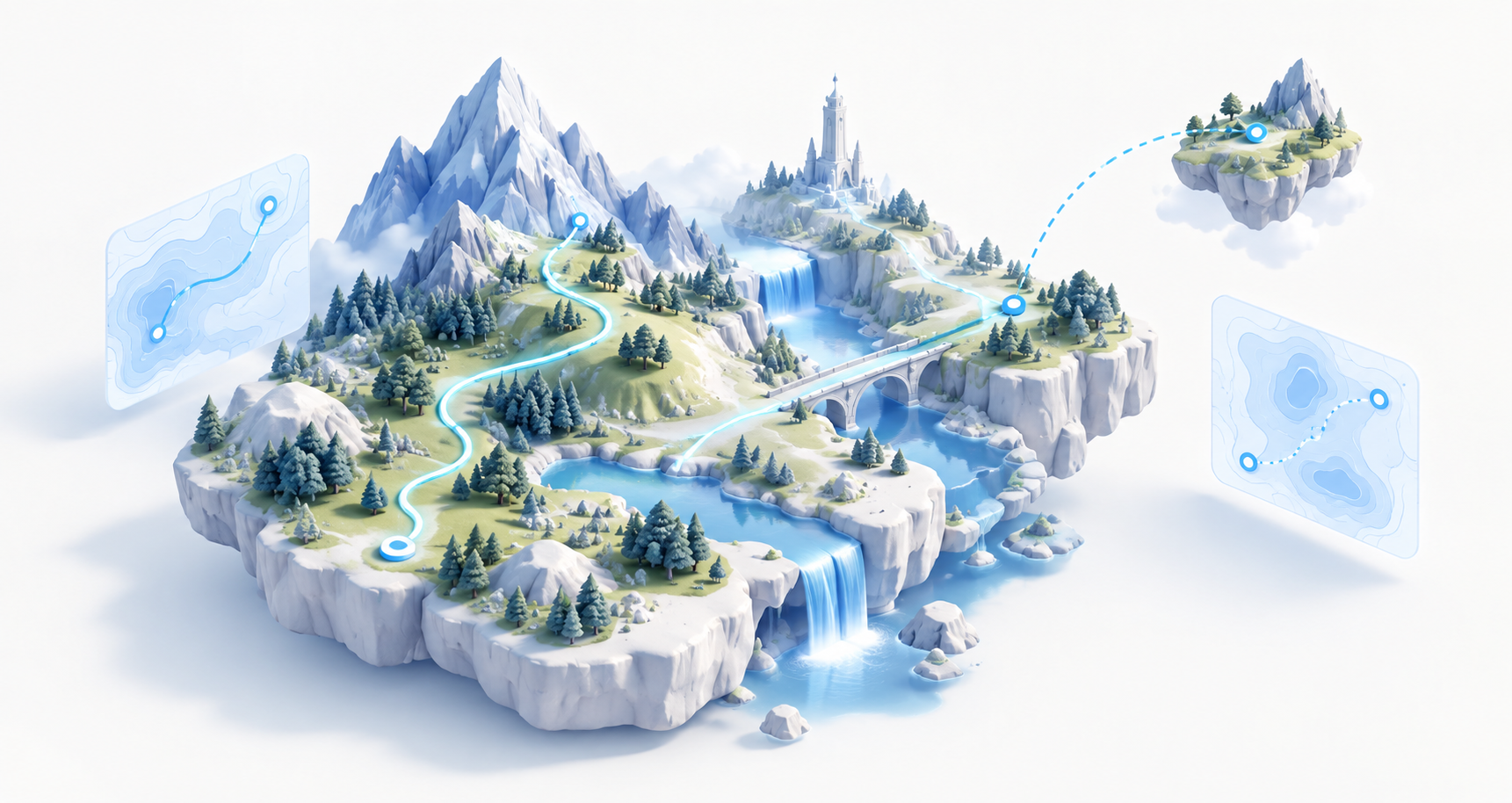
야숨과 왕눈에서 오래 남는 것은 퀘스트의 결말만이 아니다. 비 때문에 돌아간 절벽, 간신히 도착한 정상, 멀리서 보고 직접 찾아간 장소도 기억이 된다. 이 여행감은 그래픽의 정밀함보다 풍경을 읽고 경로를 선택하며 이동의 결과를 받아들이게 하는 UX와 관계가 깊다.
이 글은 젤다의 전설 브레스 오브 더 와일드(야숨), 티어스 오브 더 킹덤(왕눈), The Elder Scrolls V: Skyrim을 비교하는 게임 UX 경험 및 리뷰다. 어느 게임이 누구에게나 더 기억에 남는다는 순위를 매기기보다, 원문에서 제기한 여행감의 차이를 시스템과 플레이 경험의 관계로 해석한다. 개발자 발언과 공식 기능 설명은 출처를 붙이고, 기억과 몰입에 대한 설명은 이 글의 분석으로 구분한다.
먼저, 그래픽이 더 떨어진다는 전제부터 고치자
“젤다는 스카이림보다 기술적으로 그래픽이 부족한데 왜 더 인상적인가?”라는 질문은 비교 조건이 빠져 있다. 스카이림 원작, Special Edition, 그래픽 모드 적용판은 같은 기준이 아니다. 젤다 역시 Switch 원본과 Switch 2 Edition을 구분해야 한다. 공식 제품 페이지도 후자의 화질·성능 개선을 별도로 안내한다.
따라서 이 글은 야숨·왕눈의 Switch 원본과 스카이림의 기본 탐험 구조를 중심으로 이야기한다. 스카이림의 생존 모드와 모드는 기본 비교에서 제외하되, 결론이 달라지는 중요한 예외로 다룬다. 해상도나 프레임률을 측정한 성능 리뷰는 아니다.
더 유용한 질문은 이것이다. 사실적인 표면 묘사만으로 설명되지 않는 여행감은 어디에서 오는가? 렌더링의 정밀함, 미술의 일관성, 행동할 수 있는 범위는 각각 다른 축이다.
1. 이동 도중에도 계속 작은 목적이 생긴다
퀘스트를 받아 지도 표시를 따라가고, 던전을 끝내는 흐름은 스카이림에서 가능한 플레이 방식이다. 그러나 그 게임에도 우연한 사건, 이름 없는 폐허, 길가의 이야기가 있다. 이동을 전부 콘텐츠 사이의 공백으로 설명하면 탐험의 중요한 부분을 놓친다.
젤다에서 두드러지는 것은 이동 자체가 다음 선택을 만들어 내는 빈도와 방식이다. 멀리 있는 탑을 보며 출발해도, 절벽의 경사와 남은 스태미나를 보고 경로를 바꾸게 된다. 정상은 도착점이면서 주변을 다시 살피는 관측점이 된다.
이를 설명하는 가상의 동선은 다음과 같다.
저 산이 궁금하다 → 오르다가 비를 만난다 → 완만한 길로 돌아간다 → 다른 지형을 발견한다 → 다음 목적지를 정한다.
왕눈에서는 여기에 동굴 입구를 발견하고 내부를 탐색하는 갈래가 추가된다. 동굴 탐험은 두 작품을 한데 묶기보다 왕눈의 확장으로 구분하는 편이 정확하다. 닌텐도 인터뷰도 왕눈에서 동굴이 지형을 보는 방식을 바꾼다고 설명한다. 개발자 인터뷰 3부
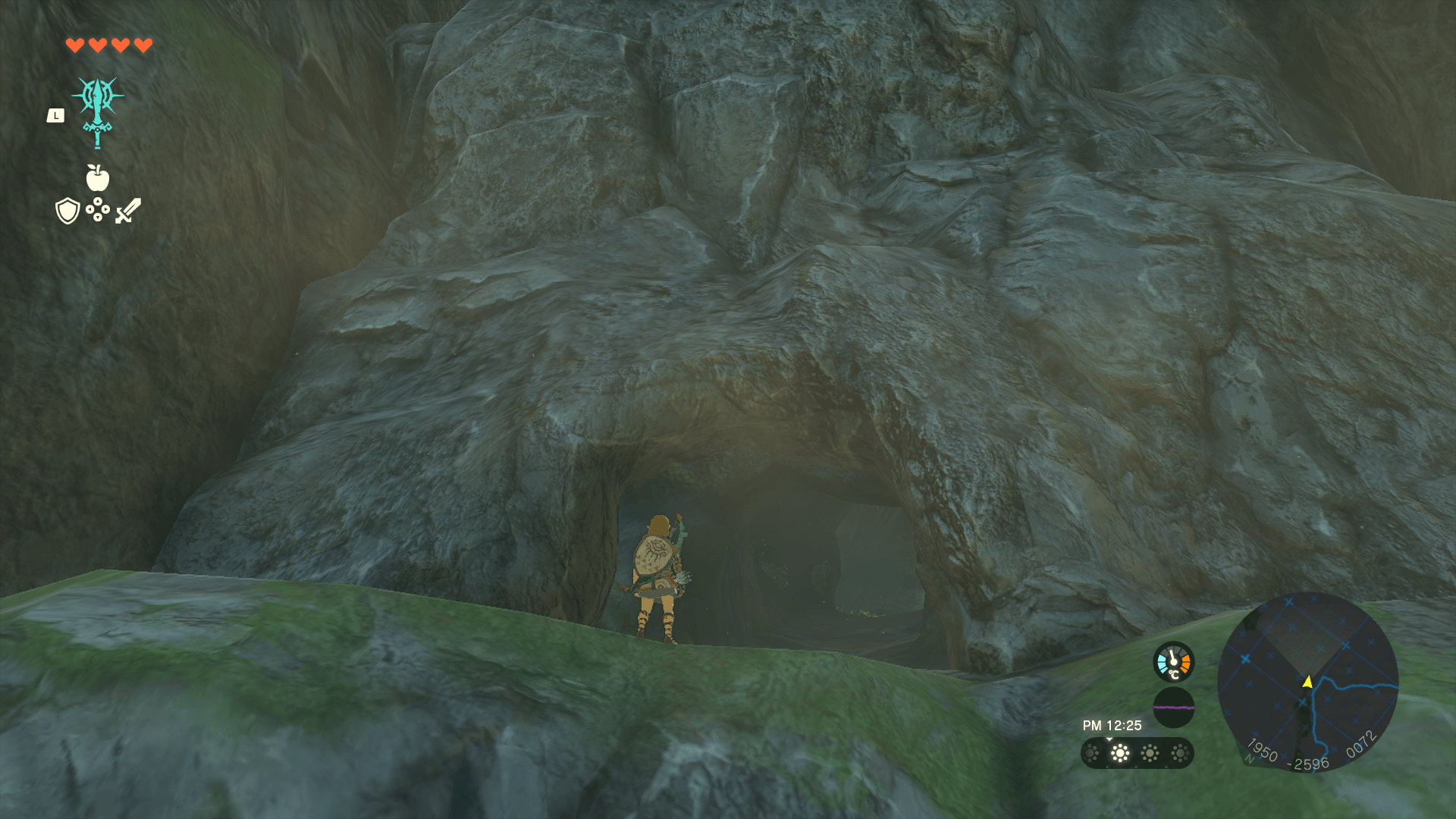
절벽이 오를 표면이면서 들어갈 장소가 되는 예. 닌텐도 공식 개발 중 화면, © Nintendo. 출처: 개발자 인터뷰 3부.
여기서 여행의 단위는 퀘스트 하나가 아니라 관찰 → 예상 → 선택 → 결과 → 재관찰이라는 반복이 된다. 목적지를 잊는다는 것은 항상 산만하다는 뜻이 아니다. 플레이어가 도중에 더 흥미로운 목표를 선택했다는 뜻일 수 있다.
2. 풍경이 내비게이션의 일부가 된다
산의 윤곽, 탑, 성, 연기처럼 멀리서 구별되는 표지는 이동 방향을 스스로 정할 재료가 된다. 랜드마크 기반 길찾기라는 말은 이 경험을 설명하기에 유용하다. 다만 이것을 젤다만의 독점적 기법이나 모든 지형에 대한 공식 설계 명칭으로 볼 필요는 없다.
야숨에도 미니맵, 퀘스트 마커, 망원경과 핀, 센서, 빠른 이동이 있다. 스카이림에도 풍경으로 길을 찾는 경험이 있다. 차이는 UI의 유무보다 어디에 주의를 기울이고 어떤 정보를 직접 추론하게 하는가에 있다.
나침반의 아이콘을 좇을 때는 방향이 바로 주어진다. 산 너머 탑을 향할 때는 능선, 강, 발판을 함께 읽어야 한다. 풍경이 화면의 배경에서 의사결정의 자료로 바뀌는 순간이다. 이처럼 스스로 연결한 위치 관계가 장소를 회상할 단서가 될 수 있다는 것이 이 글의 해석이다. 두 게임의 기억 성능을 비교한 실험 결과를 뜻하지는 않는다.
3. 기억에 남는 것은 불편함보다 해결한 상황이다
등반, 스태미나, 젖은 절벽, 온도와 장비는 이동에 비용을 만든다. 야숨의 공식 소개에서도 등반·활강과 환경에 맞는 준비가 중요한 행동으로 제시된다. 야숨 공식 소개
그러나 고생이 많을수록 좋은 경험이 되는 것은 아니다. 비가 그치기를 아무 선택 없이 기다리는 시간은 지루할 수 있다. 불편함이 의미를 가지려면 원인을 이해할 수 있고, 우회하거나 준비하거나 다시 시도할 방법이 있어야 한다.
“추운 산”이라는 시각적 정보에 “음식을 준비했다”, “바위턱에서 쉬었다”, “다른 길을 골랐다” 같은 행동이 연결되면 장소를 이야기하기 쉬워진다. 이 예시들은 가능한 상황을 설명하기 위한 것이며 특정 플레이 기록은 아니다.
스카이림에서도 이 관계는 달라질 수 있다. 공식 생존 모드는 추위·허기·피로와 빠른 이동 제한을 추가한다. 그러면 이동과 준비의 비중도 커진다. 따라서 스카이림의 지형은 항상 배경에 불과하다는 주장은 성립하지 않는다. Bethesda 생존 모드 안내
4. 여백은 콘텐츠 수보다 경험의 리듬에 가깝다
야숨이 스카이림보다 객관적으로 콘텐츠 밀도가 낮다고 결론 내리려면, 면적과 이동 시간, 무엇을 콘텐츠로 세는지부터 정의해야 한다. 이 글에는 그런 측정 데이터가 없다. 코로그나 채집 요소까지 세면 인상도 달라진다.
대신 주목할 것은 자극의 간격과 강약이다. 전투 뒤에 풀밭을 걷고, 먼 지형을 바라보며 방향을 고르고, 도착해서 다시 활동하는 시간이 구분되면 출발과 도착 사이에 체감할 만한 구간이 생긴다.
이 여백은 다음 사건을 돋보이게 할 수 있다. 반대로 걷는 시간만 길고 관찰하거나 결정할 것이 없다면 공허해질 수 있다. 왕눈 역시 하늘·지상·지저를 오가며 활동의 밀도가 달라지므로, 두 젤다를 모두 느긋하고 빈 세계라고 묶는 것은 무리다.
5. 소리는 장소의 거리와 분위기를 전달한다
야숨의 필드에서 들리는 성긴 피아노와 발소리, 바람, 비, 물소리는 풍경에 주의를 머물게 하는 요소로 읽을 수 있다. 음악이 비워 둔 자리에 움직임과 환경의 변화가 들린다는 감각이다.
그렇다고 야숨·왕눈 전체의 음악이 항상 절제되어 있거나 스카이림의 음악이 줄곧 감정을 밀어붙이는 것은 아니다. 젤다도 전투와 중요한 장면에서는 음악의 존재감이 커지고, 스카이림에도 차분한 탐험 음악과 환경음이 있다.
더 구체적인 근거는 소리의 공간성이다. 닌텐도 사운드 담당자는 멀어지는 소리가 주변 소리에 섞이는 거리 표현을 설명한다. 개발자 인터뷰 5부 여행감은 단순히 음악을 줄여서가 아니라, 소리가 시야 밖의 공간까지 느끼게 할 때 생길 수 있다.
6. 미술은 예쁘게 보이는 것과 읽히는 것을 함께 다룬다
젤다의 색면과 실루엣, 원경의 구분은 무엇을 볼지 결정하는 데 도움을 준다. 아오누마 에이지는 2016년 인터뷰에서 애니메이션풍 표현을 선택한 이유를 플레이어가 찾아야 할 요소를 식별하게 하는 문제와 연결했다. TIME 개발자 인터뷰
이 설명은 고해상도 텍스처보다 단순한 그림이 항상 낫다는 뜻이 아니다. 실제로 중요한 것은 식별 가능한 형태와 행동 가능성이 연결되는가다. 눈에 띄는 높은 곳에 오를 수 있고, 올라가면 다음 목표를 볼 수 있을 때 미술과 이동 규칙이 같은 일을 한다.
스카이림의 산, 도시, 유적도 고유한 정체성을 가진다. 사실적 표현이 반드시 지역을 비슷하게 만든다는 일반화는 피해야 한다. 고해상도만으로 기억하기 좋은 공간이 완성되지 않는다는 정도가 타당하다.
7. 왕눈은 목적지에 더해 이동 방법을 선택하게 한다
왕눈의 울트라핸드는 물체를 연결해 탈것을 만들게 한다. 트레루프는 위쪽 표면을 통과하는 길을, 리버레코는 움직임을 되돌리는 활용을 제공한다. 이동 자유를 울트라핸드 하나의 성과로 설명하기보다 여러 능력과 지형의 조합으로 보는 편이 정확하다. 왕눈 공식 기능 소개
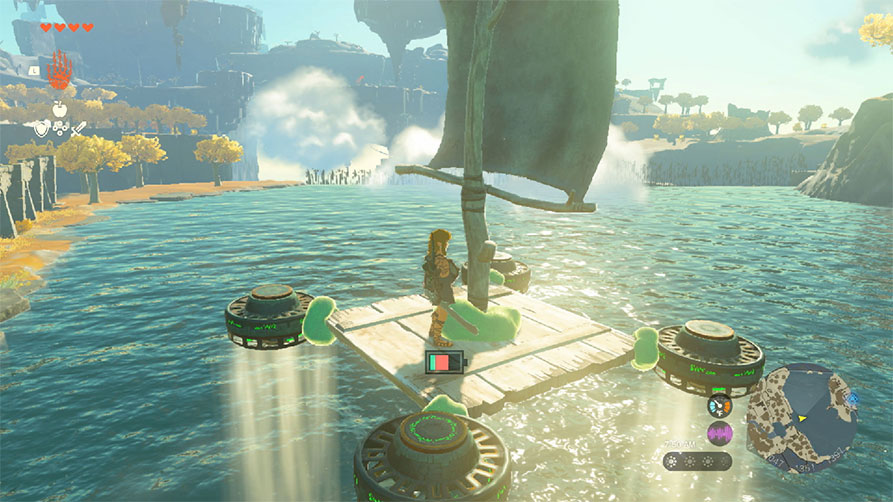
부품의 조합이 이동 수단이 되는 예. 닌텐도 공식 게임 화면, © Nintendo. 출처: 왕눈 공식 소개.
같은 물을 건너도 헤엄치기, 뗏목 만들기, 높은 곳에서 활강하기는 서로 다른 판단을 요구한다. 목적지에 도착했다는 사실에 제작, 실패, 수정 같은 과정이 붙으면 자기만의 사건으로 이야기할 재료가 늘어난다.
여기에도 역설이 있다. 효율적인 비행 수단에 익숙해지면 지상의 장애물과 세부 지형을 건너뛸 수 있다. 어떤 플레이어에게는 여행감이 늘고, 다른 플레이어에게는 야숨 특유의 느린 이동감이 줄 수 있다. 자유의 확대와 지형을 몸으로 느끼는 정도는 항상 함께 증가하지 않는다.
스카이림과 젤다는 서로 다른 기억의 재료를 준다
다음 표는 기본 구조에서 두드러지는 경향을 정리한 리뷰다. 기능의 유무나 우열을 판정한 표가 아니다.
| 관점 | 스카이림 | 야숨·왕눈 |
|---|---|---|
| 다음 행동의 계기 | 인물, 퀘스트, 나침반, 우연한 발견 | 랜드마크, 지형, 퀘스트, 우연한 발견 |
| 이동 중 판단 | 길, 만남, 전투, 목적지 선택 | 등반, 활강, 스태미나, 환경, 목적지 선택 |
| 자유의 강조점 | 어떤 인물로 살며 어떤 이야기에 참여할지 | 어디로 가고 어떤 방식으로 문제를 풀지 |
| 기억의 재료 | 인물 관계, 역할 선택, 환경적 서사, 장소 | 경로 선택, 지형과의 상호작용, 발견, 장소 |
| 중요한 변수 | 모드, 생존 모드, 빠른 이동 사용 | 빠른 이동, 공략 사용, 왕눈의 탈것 활용 |
스카이림은 세계에 사는 사람들과 그들의 사정을 따라갈 때 강하다. 젤다는 눈앞의 공간을 어떻게 통과할지 생각하게 할 때 강하다. 물론 두 경험은 겹친다. 어느 쪽을 더 오래 기억하는지는 플레이어가 무엇에 관심을 두고 어떻게 플레이하는지에도 달려 있다.
제품 UX로 가져올 것은 불편함이 아니라 선택의 의미다
이 비교에서 얻을 수 있는 설계 질문은 세 가지다.
- 화면 자체가 다음 행동의 단서를 주는가? 설명문을 더하기 전에 시각적 위계와 배치를 살펴볼 수 있다.
- 사용자가 선택한 결과를 이해할 수 있는가? 시도와 피드백이 이어져야 주도권이 감각으로 남는다.
- 안내의 강도를 조절할 수 있는가? 탐색하고 싶은 사용자와 빠르게 끝내고 싶은 사용자는 필요한 지원이 다르다.
업무용 제품에 일부러 비효율을 넣을 이유는 없다. 결제나 행정 업무에서는 빠르고 접근 가능한 완수가 우선일 수 있다. 게임에서 도전으로 받아들여지는 마찰도 다른 맥락에서는 장벽이 된다.
야숨과 왕눈의 여행감을 설명하는 핵심은 풍경을 보고, 선택하고, 움직이고, 결과를 받아들이는 과정이 이어진다는 점이다. 남는 기억은 멋진 화면만이 아니라, 그 공간에서 내가 무엇을 했는지에 관한 이야기일 수 있다.
What lingers from Breath of the Wild and Tears of the Kingdom is not just a quest’s ending. It is a cliff approached differently because of rain, a summit barely reached, or a place spotted far away and eventually visited. That sense of a journey has much to do with UX that asks players to read landscapes, choose routes, and live with the consequences of moving through them.
This is a game UX experience review comparing The Legend of Zelda: Breath of the Wild, Tears of the Kingdom, and The Elder Scrolls V: Skyrim. It examines the relationship between systems and the feeling of travel raised in the original question, rather than ranking which game everyone will remember best. Developer statements and official feature descriptions are linked; explanations about memory and immersion are the article’s analysis.
First, reconsider the premise about inferior graphics
“Why is Zelda more impressive even though its graphics are technically worse than Skyrim’s?” leaves the comparison unspecified. Original Skyrim, Special Edition, and a heavily modified installation are different reference points. Zelda’s original Switch releases and Switch 2 Editions also need separating. The official product pages describe the latter’s visual and performance improvements separately.
This article therefore focuses on the original Switch versions of Breath of the Wild and Tears of the Kingdom, and Skyrim’s basic exploration structure. Survival Mode and mods sit outside the baseline comparison but matter as exceptions that can change the conclusion. This is not a benchmark of resolution or frame rate.
A more useful question is where the feeling of travel comes from when realistic surface detail cannot explain it. Rendering fidelity, artistic coherence, and the range of available actions are distinct dimensions.
1. Small objectives keep emerging along the way
Accepting a quest, following its marker, and completing a dungeon is one possible way to play Skyrim. But it also contains chance encounters, unmarked ruins, and roadside stories. Calling all travel a gap between content overlooks an important part of its exploration.
What stands out in Zelda is how movement itself generates further choices. You might set off toward a distant tower, then change your route after considering a cliff’s slope and your remaining stamina. A summit is both a destination and a vantage point for looking around again.
Here is an imagined route illustrating that loop:
A mountain catches your attention → rain interrupts the climb → you take a gentler route → another landform appears → you choose a new destination.
Tears of the Kingdom adds branches such as finding a cave entrance and exploring inside. Cave exploration belongs more accurately to the sequel’s expansion than to a combined description of both games. Nintendo’s interview also describes caves as changing how players see terrain. Developer interview, Part 3
A cliff becomes somewhere to enter as well as a surface to climb. Official Nintendo development image, © Nintendo. Source: developer interview, Part 3.
The unit of travel becomes a repeating sequence of observe → anticipate → choose → experience a result → observe again, rather than a single quest. Forgetting a destination does not necessarily mean distraction. It can mean the player chose a more interesting goal along the way.
2. The landscape becomes part of navigation
Mountain outlines, towers, a castle, and smoke provide recognizable distant cues for choosing a direction. Landmark-based navigation is a useful description of this experience. It need not be treated as Zelda’s exclusive technique or an official name for every terrain decision.
Breath of the Wild also has a minimap, quest markers, a scope and pins, a sensor, and fast travel. Skyrim also allows navigation by landscape. The distinction is less about whether UI exists and more about where attention goes and what players infer for themselves.
A compass icon immediately supplies a direction. Reaching a tower beyond a mountain requires reading ridges, rivers, and footholds together. The landscape turns from a backdrop into evidence for a decision. This article interprets those self-constructed spatial relationships as possible cues for recalling places. That is not a finding from an experiment comparing memory performance between these games.
3. A resolved situation matters more than inconvenience
Climbing, stamina, wet cliffs, temperature, and equipment make movement costly. Breath of the Wild’s official introduction presents climbing, gliding, and preparation for the environment as important actions. Official Breath of the Wild overview
Yet more hardship does not automatically produce a better experience. Waiting for rain to stop without a meaningful alternative can be boring. Friction needs an understandable cause and some way to prepare, take a detour, or try again.
A location becomes easier to describe when visual information such as “a cold mountain” connects with actions: preparing food, resting on a ledge, or choosing another path. These are illustrative possibilities, not a record of a particular play session.
That relationship can change in Skyrim, too. Official Survival Mode introduces cold, hunger, fatigue, and restrictions on fast travel. Preparation and movement consequently matter more. The claim that Skyrim’s terrain is always merely a backdrop does not hold. Bethesda’s Survival Mode overview
4. Breathing room concerns rhythm more than content counts
To conclude that Breath of the Wild objectively has lower content density than Skyrim, we would first need to define area, travel time, and what counts as content. This article has no such measurements. Counting Koroks or gathering opportunities can change the impression.
A more useful focus is the spacing and intensity of stimulation. Walking through grass after combat, looking at distant terrain to pick a direction, and becoming active again on arrival can create a perceptible interval between departure and destination.
That interval may make the next event stand out. But a long walk without anything to observe or decide can feel empty. Tears of the Kingdom also changes activity density across the sky, surface, and Depths, so treating both Zelda games as uniformly sparse, leisurely worlds goes too far.
5. Sound communicates distance and atmosphere
The sparse piano, footsteps, wind, rain, and water heard in Breath of the Wild’s fields can be understood as keeping attention in the landscape. Changes in movement and surroundings become audible in the space that music leaves open.
This does not mean Zelda’s music is always restrained or Skyrim’s constantly pushes an emotional response. Combat and major scenes give Zelda’s music a stronger presence, while Skyrim also includes quiet exploration music and environmental sound.
Spatial sound provides a more concrete point of reference. Nintendo’s sound director describes distant sounds blending into surrounding ambience. Developer interview, Part 5 A sense of travel can emerge when sound conveys space beyond the visible scene, not simply when there is less music.
6. Art addresses readability as well as beauty
Zelda’s color areas, silhouettes, and differentiated distant scenery help players decide where to look. In a 2016 interview, Eiji Aonuma connected the animation-inspired style with helping players identify things to find. TIME developer interview
This does not mean simple pictures are always better than high-resolution textures. What matters is whether recognizable forms connect with possible actions. When a conspicuous high point can be climbed and reveals another objective, art and movement rules are doing related work.
Skyrim’s mountains, cities, and ruins have distinctive identities as well. Realistic rendering does not necessarily make regions look alike. The defensible claim is that high resolution alone does not complete a memorable space.
7. Tears of the Kingdom adds a choice of travel methods
Ultrahand lets players connect objects into vehicles. Ascend opens routes through surfaces above Link, while Recall offers uses for reversing motion. Travel freedom is more accurately attributed to the interaction of abilities and terrain than to Ultrahand alone. Official Tears of the Kingdom features
Combined parts become a means of travel. Official Nintendo game image, © Nintendo. Source: official Tears of the Kingdom overview.
Swimming across the same water, building a raft, and gliding from higher ground demand different judgments. Adding construction, failure, and revision to the fact of arrival provides more material for a personal story.
There is a paradox here. Familiarity with an efficient flying vehicle can let players skip ground obstacles and local details. Some may feel a stronger sense of travel; others may miss Breath of the Wild’s slower movement. Greater freedom and a more physical experience of terrain do not always increase together.
Skyrim and Zelda offer different material for memories
This table summarizes tendencies in their basic structures as a review. It is not a feature checklist or a ranking.
| Perspective | Skyrim | Breath of the Wild / Tears of the Kingdom |
|---|---|---|
| Prompts for the next action | Characters, quests, compass, chance discoveries | Landmarks, terrain, quests, chance discoveries |
| Decisions during travel | Paths, encounters, combat, destinations | Climbing, gliding, stamina, environment, destinations |
| Emphasis of freedom | Who to become and which stories to join | Where to go and how to solve problems |
| Material for memories | Relationships, role choices, environmental storytelling, places | Route choices, terrain interactions, discoveries, places |
| Important variables | Mods, Survival Mode, fast travel use | Fast travel, guides, vehicle use in the sequel |
Skyrim shines when following the people living in its world and their circumstances. Zelda shines when asking how to traverse the space ahead. Those experiences overlap. Which stays with someone longer also depends on their interests and way of playing.
Bring meaningful choices into product UX
The comparison suggests three design questions.
- Does the screen itself suggest the next action? Examine visual hierarchy and placement before adding more explanation.
- Can users understand the outcome of their choices? Attempts need connected feedback for agency to become tangible.
- Can the amount of guidance be adjusted? People who want to explore and those who want to finish quickly need different support.
There is no reason to deliberately add inefficiency to work tools. Payments and administrative tasks may prioritize quick, accessible completion. Friction accepted as a challenge in a game can become a barrier elsewhere.
What helps explain Zelda’s sense of a journey is the continuity between seeing, choosing, moving, and experiencing consequences. A lasting memory may concern what someone did in that space as much as how impressive it looked.
《旷野之息》和《王国之泪》留下的记忆,不只有任务的结局。因下雨而绕过的悬崖、勉强登上的山顶、从远处看见后亲自抵达的地方,也会成为回忆。这种旅途感,与其说取决于画面的精细程度,不如说与让玩家阅读风景、选择路线并承受移动结果的 UX 密切相关。
这是一篇比较《塞尔达传说 旷野之息》、《王国之泪》和《上古卷轴 V:天际》的游戏 UX 体验评论。文章不评判哪款游戏对所有人都更难忘,而是从系统与游玩体验的关系,分析原文提出的旅途感差异。开发者发言和官方功能说明附有来源,关于记忆与沉浸感的解释则属于本文的分析。
首先,修正“画面更差”的前提
“塞尔达的图形技术不如天际,为什么却更令人印象深刻?”这个问题缺少比较条件。《天际》原版、Special Edition 和使用画质模组的版本不是同一参照。塞尔达的 Switch 原版与 Switch 2 Edition 也需要区分;官方产品页面另有说明后者的画质与性能改进。
因此,本文以两款塞尔达的 Switch 原版与《天际》的基本探索结构为主。生存模式和模组不纳入基础比较,但作为可能改变结论的重要例外讨论。这不是测量分辨率或帧率的性能评测。
更有价值的问题是:写实的表面细节无法充分解释的旅途感,究竟来自哪里?渲染精度、美术一致性和可采取行动的范围,是不同维度。
1. 移动途中不断产生小目标
接受任务、跟随地图标记、完成地牢,是《天际》的一种玩法。但它也有偶遇、没有标记的遗迹和路边故事。将所有移动说成内容之间的空白,会遗漏探索的重要部分。
塞尔达突出的是移动本身产生下一次选择的方式。即使朝远处的塔出发,也可能根据悬崖坡度与剩余精力改变路线。山顶既是终点,也成为重新观察周围的地点。
下面是一条用于说明循环的假想路线:
对那座山感到好奇 → 攀登时遇到下雨 → 绕向平缓的路 → 发现另一处地形 → 决定下一个目的地。
《王国之泪》又增加了发现洞口、进入洞穴探索的分支。洞穴探索更适合被视为续作的扩展,而不是笼统归于两款作品。任天堂访谈也说明,洞穴改变了玩家观看地形的方式。开发者访谈第 3 部分
悬崖既是可以攀爬的表面,也是可以进入的地方。任天堂官方开发中画面,© Nintendo。来源:开发者访谈第 3 部分。
此时,旅途的单位不再只是一个任务,而是观察 → 预想 → 选择 → 结果 → 再次观察的循环。忘记目的地不一定意味着分心,也可能意味着玩家途中选择了更有趣的目标。
2. 风景成为导航的一部分
山的轮廓、塔、城堡和烟雾等远处可辨认的标志,为自主选择方向提供材料。“基于地标的寻路”适合描述这种体验,但不必将其视为塞尔达独有的技术,或所有地形设计的官方名称。
《旷野之息》同样有小地图、任务标记、望远镜与图钉、感应器和快速传送。《天际》也能依靠风景寻路。差别与其说在于有没有 UI,不如说在于注意力投向哪里,以及哪些信息需要玩家自己推断。
指南针图标直接给出方向。走向山后的塔,则需要一起阅读山脊、河流和落脚点。风景从背景变成决策依据。本文认为,自己建立的位置关系可能成为回忆地点的线索;这并不是比较两款游戏记忆表现的实验结论。
3. 留下记忆的,是解决的情境而非麻烦本身
攀爬、精力、湿滑的悬崖、温度和装备,为移动带来成本。《旷野之息》官方介绍也把攀爬、滑翔和适应环境的准备列为重要行动。《旷野之息》官方介绍
但受苦越多,并不意味着体验越好。如果没有可选行动,只能等待雨停,也可能令人厌烦。摩擦要有意义,需要原因清晰,而且存在绕行、准备或重试的方法。
当“寒冷的山”这样的视觉信息,与“准备了食物”“在岩石平台上休息”“选择另一条路”等行动联系起来,地点就更容易被讲成故事。这些只是可能情境的示例,不是某次游玩记录。
《天际》里的这种关系也会改变。官方生存模式加入寒冷、饥饿、疲劳和快速传送限制,使准备与移动更重要。因此,不能说《天际》的地形永远只是背景。Bethesda 生存模式介绍
4. 留白更关乎体验节奏,而非内容数量
要认定《旷野之息》的内容密度客观上低于《天际》,首先必须定义面积、移动时间,以及什么算作内容。本文没有这样的测量数据。把呀哈哈或采集机会算进去,印象也可能变化。
更值得关注的是刺激的间隔与强弱。战斗后走过草地、望向远处选择方向、抵达后再次活动,这些阶段若能区分,出发与到达之间就有了可感知的过程。
这种间隔可能让下一件事更突出。但如果只是走得很久,没有值得观察或决定的内容,也会感到空洞。《王国之泪》的天空、地面与地底活动密度各异,因此不能把两款塞尔达都概括为稀疏而悠闲的世界。
5. 声音传达地点的距离与氛围
《旷野之息》野外稀疏的钢琴音、脚步、风、雨和水声,可以被理解为让注意力停留在风景中的因素。音乐留下空间,移动和环境的变化便能被听见。
这不代表两款塞尔达的音乐始终克制,也不代表《天际》一直用音乐推动情绪。塞尔达在战斗和重要场景也会强化音乐,《天际》同样有安静的探索音乐与环境声。
更具体的依据是声音的空间性。任天堂音效负责人描述了远去的声音逐渐融入周围环境声的距离表现。开发者访谈第 5 部分 旅途感可能来自声音让人感到视野之外的空间,而不只是减少音乐。
6. 美术同时处理美感与可读性
塞尔达的色块、剪影和远景区分,有助于决定看向哪里。青沼英二在 2016 年访谈中,将动画风格的选择与帮助玩家辨认需要发现的元素联系起来。TIME 开发者访谈
这不意味着简单画面总比高分辨率纹理更好。重要的是可辨认的形态是否连接着行动可能性。显眼的高处可以攀登,登上去又能看见下一目标时,美术和移动规则就共同发挥作用。
《天际》的山、城市和遗迹也有鲜明身份。不能概括为写实表现必然让地区相似。合理的说法是:仅有高分辨率,还不足以构成容易记住的空间。
7. 《王国之泪》让玩家选择如何抵达
究极手让玩家连接物体、制造载具。通天术开辟穿过上方表面的路线,倒转乾坤则提供逆转运动的用途。移动自由更适合被解释为多种能力与地形的组合,而非究极手单独的成果。《王国之泪》官方功能介绍
零件的组合成为移动手段。任天堂官方游戏画面,© Nintendo。来源:《王国之泪》官方介绍。
渡过同一片水域,游泳、造筏和从高处滑翔需要不同判断。抵达这件事如果附带制作、失败与修改的过程,就有更多材料可以讲成自己的故事。
其中也存在悖论。熟练使用高效飞行载具后,可能跳过地面障碍和局部地形。有人会感到旅途更丰富,也有人会觉得《旷野之息》缓慢行进的感觉减少了。自由增加与切身感受地形的程度,并不总是同步增长。
《天际》与塞尔达提供不同的记忆材料
下表是对基本结构中突出倾向的评论,不是功能有无清单或优劣排名。
| 角度 | 《天际》 | 《旷野之息》与《王国之泪》 |
|---|---|---|
| 下一行动的契机 | 人物、任务、指南针、偶然发现 | 地标、地形、任务、偶然发现 |
| 移动中的判断 | 道路、相遇、战斗、目的地 | 攀爬、滑翔、精力、环境、目的地 |
| 自由的重点 | 成为什么人、参与哪些故事 | 去哪里、如何解决问题 |
| 记忆材料 | 人物关系、角色选择、环境叙事、地点 | 路线选择、地形互动、发现、地点 |
| 重要变量 | 模组、生存模式、快速传送使用 | 快速传送、攻略使用、续作载具运用 |
《天际》擅长让玩家追随世界中人物的处境;塞尔达擅长让人思考如何穿越眼前空间。两种体验当然会重叠。哪种更难忘,也取决于玩家关注什么、如何游玩。
产品 UX 应借鉴选择的意义,而不是不便
这一比较带来三个设计问题。
- 画面本身能否提示下一步行动? 增加说明前,可以先检查视觉层级和布局。
- 用户能否理解选择的结果? 尝试与反馈需要相连,主导权才会成为实际感受。
- 引导强度能否调整? 想探索与想快速完成的人,需要不同支持。
没有必要故意给工作工具增加低效环节。支付与行政事务可能更重视快速、无障碍地完成。在游戏中被接受为挑战的摩擦,换个场景就可能成为障碍。
解释塞尔达旅途感的关键,是观看、选择、移动和接受结果这些过程彼此相连。长久留下的记忆,可能既关乎画面,也关乎自己在那个空间里做过什么。
『ブレス オブ ザ ワイルド』と『ティアーズ オブ ザ キングダム』で長く残るのは、クエストの結末だけではない。雨で迂回した崖、ようやく着いた山頂、遠くに見つけて実際に訪れた場所も思い出になる。この旅の感覚は、描写の精密さよりも、風景を読み、経路を選び、移動の結果を引き受ける UX と深く関わっている。
本稿は『ゼルダの伝説 ブレス オブ ザ ワイルド』、『ティアーズ オブ ザ キングダム』、『The Elder Scrolls V: Skyrim』を比較するゲーム UX の体験レビューだ。誰にとってもどの作品が記憶に残るかを順位づけせず、元の問いにある旅の感覚の違いを、システムと体験の関係から考える。開発者の発言や公式の機能説明には出典を示し、記憶や没入感の説明は本稿の分析として区別する。
まず「グラフィックスが劣る」という前提を見直す
「ゼルダは Skyrim より技術的にグラフィックスが劣るのに、なぜ印象深いのか」という問いには比較条件が欠けている。Skyrim の原版、Special Edition、画質 MOD を適用した版は同じ基準ではない。ゼルダも Switch 原版と Switch 2 Edition を分ける必要があり、公式製品ページも後者の画質・性能向上を別に案内している。
そこで本稿は、ゼルダ 2 作品の Switch 原版と Skyrim の基本的な探索構造を中心に扱う。サバイバルモードと MOD は基本比較から外すが、結論が変わる重要な例外として取り上げる。解像度やフレームレートの測定レビューではない。
より有用な問いは、写実的な表面描写だけでは説明できない旅の感覚がどこから来るかだ。描画の精密さ、美術の一貫性、可能な行動の幅は、それぞれ別の軸である。
1. 移動中にも小さな目的が生まれ続ける
クエストを受け、地図の表示を追い、ダンジョンを攻略するのは Skyrim で可能な遊び方だ。しかし、偶然の出来事、地図に示されない遺跡、道端の物語もある。移動をすべてコンテンツ間の空白と捉えると、探索の重要な部分を見落とす。
ゼルダで目立つのは、移動そのものが次の選択を生む仕組みだ。遠くの塔に向かっても、崖の傾斜と残りのがんばりを見て経路を変える。山頂は到着点であり、再び周囲を見渡す観測点でもある。
この循環を示す、仮の経路を考えてみよう。
あの山が気になる → 登る途中で雨に遭う → 緩やかな道へ回る → 別の地形を見つける → 次の目的地を決める。
『ティアーズ オブ ザ キングダム』には、洞窟の入口を見つけて中を探索する分岐も加わる。洞窟探索は両作品を一括りにするより、続編での拡張として区別する方が正確だ。任天堂のインタビューも、洞窟が地形の見方を変えると説明している。開発者インタビュー Part 3
崖が登る面であると同時に、入る場所にもなる例。任天堂公式の開発中画面、© Nintendo。出典:開発者インタビュー Part 3。
旅の単位はクエスト一つではなく、観察 → 予想 → 選択 → 結果 → 再観察の繰り返しになる。目的地を忘れることは、必ずしも集中できていないことではない。途中でもっと面白い目標を選んだのかもしれない。
2. 風景がナビゲーションの一部になる
山の輪郭、塔、城、煙など、遠くから見分けられる目印は、自分で方向を決める材料になる。ランドマークに基づく道探しという言葉は、この体験の説明に適している。ただし、ゼルダだけの技法や全地形の公式設計名称と捉える必要はない。
『ブレス オブ ザ ワイルド』にもミニマップ、クエストマーカー、望遠鏡とピン、センサー、ワープがある。Skyrim にも風景から道を探す体験がある。違いは UI の有無より、どこに注意を向け、何を自分で推測するかにある。
コンパスのアイコンは方向をすぐ示す。山の向こうの塔を目指すなら、尾根、川、足場を合わせて読む必要がある。風景が背景から判断の材料に変わる瞬間だ。こうして自分で結びつけた位置関係が、場所を思い出す手がかりになり得るというのが本稿の解釈である。両作品の記憶成績を比較した実験結果ではない。
3. 残るのは不便さより、解決した状況だ
登攀、がんばり、濡れた崖、温度、装備は移動にコストを生む。『ブレス オブ ザ ワイルド』の公式紹介でも、登ること、滑空すること、環境に合わせた準備が重要な行動として示されている。公式紹介
しかし、苦労が増えれば体験が良くなるわけではない。 選択肢もなく雨がやむのを待つ時間は退屈になり得る。摩擦が意味を持つには、原因が理解でき、迂回、準備、再挑戦の方法が必要だ。
「寒い山」という視覚情報に、食べ物を用意した、岩棚で休んだ、別の道を選んだといった行動が結びつくと、場所を語りやすくなる。これらは想定される状況の例であり、特定のプレイ記録ではない。
Skyrim でもこの関係は変わる。公式サバイバルモードは寒さ、空腹、疲労、ファストトラベルの制限を追加し、準備と移動の重みを増す。したがって、Skyrim の地形は常に背景にすぎないとは言えない。Bethesda のサバイバルモード紹介
4. 余白はコンテンツ数より体験のリズムに近い
『ブレス オブ ザ ワイルド』のコンテンツ密度が Skyrim より客観的に低いと結論づけるなら、面積、移動時間、何をコンテンツと数えるかを先に定義しなければならない。本稿にその測定データはない。コログや採集要素を数えるかでも印象は変わる。
注目したいのは、刺激の間隔と強弱だ。戦闘後に草地を歩き、遠くを見て方向を選び、到着して再び活動する。これらが区別されると、出発と到着の間に実感できる区間が生まれる。
その余白は次の出来事を際立たせる可能性がある。一方、歩く時間だけ長く、観察や判断の対象がなければ空虚にもなる。続編は空、地上、地底で活動密度も変わるため、両作品を一様にまばらで穏やかな世界とするのは無理がある。
5. 音が場所の距離と雰囲気を伝える
『ブレス オブ ザ ワイルド』のフィールドで聞こえるまばらなピアノ、足音、風、雨、水の音は、風景に注意を留める要素と捉えられる。音楽が空けたところに、移動や環境の変化が聞こえる感覚だ。
だからといって、ゼルダの音楽が常に控えめで、Skyrim が絶えず感情を押しつけるわけではない。ゼルダも戦闘や重要場面では音楽の存在感が強まり、Skyrim にも静かな探索曲や環境音がある。
より具体的な根拠は音の空間性である。任天堂のサウンド担当者は、遠ざかる音が周囲の環境音に混ざる距離表現を説明している。開発者インタビュー Part 5 旅の感覚は、単に音楽を減らすことではなく、視界の外の空間まで音で感じられるときに生まれ得る。
6. 美術は美しさと読み取りやすさを扱う
ゼルダの色面、シルエット、遠景の区別は、何を見るかの判断を助ける。青沼英二氏は 2016 年のインタビューで、アニメーション風表現の選択を、プレイヤーが探す要素を見分けられるようにする問題と結びつけた。TIME の開発者インタビュー
これは単純な絵が高解像度のテクスチャより常に優れているという意味ではない。重要なのは、識別できる形と行動可能性が結びついているかだ。目立つ高所に登れ、そこから次の目標が見えるなら、美術と移動ルールは同じ方向に働いている。
Skyrim の山、都市、遺跡にも固有の特徴がある。写実表現が必ず地域を似通わせるという一般化は避けたい。高解像度だけでは記憶しやすい空間は完成しない、という範囲が妥当だ。
7. 続編は行き先に加えて移動方法を選ばせる
ウルトラハンドでは物をつなげて乗り物を作れる。トーレルーフは上方の面を通り抜ける道を、モドレコは動きを戻す活用を提供する。移動の自由はウルトラハンド一つより、複数の能力と地形の組み合わせとして説明する方が正確だ。続編の公式機能紹介
部品の組み合わせが移動手段になる例。任天堂公式ゲーム画面、© Nintendo。出典:続編の公式紹介。
同じ水域でも、泳ぐ、いかだを作る、高所から滑空する方法では異なる判断が必要になる。到着した事実に製作、失敗、修正の過程が加われば、自分だけの出来事として語る材料も増える。
ここには逆説もある。効率のよい飛行手段に慣れると、地上の障害物や細かな地形を飛び越えられる。旅の感覚が増す人もいれば、前作特有のゆっくりした移動感が減る人もいる。自由の拡大と地形を身体的に感じる度合いは、必ずしも同時には増えない。
Skyrim とゼルダは異なる記憶の材料を与える
次の表は基本構造で目立つ傾向をまとめたレビューであり、機能の有無や優劣を判定したものではない。
| 観点 | Skyrim | ブレス オブ ザ ワイルド/ティアーズ オブ ザ キングダム |
|---|---|---|
| 次の行動のきっかけ | 人物、クエスト、コンパス、偶然の発見 | ランドマーク、地形、クエスト、偶然の発見 |
| 移動中の判断 | 道、出会い、戦闘、目的地 | 登攀、滑空、がんばり、環境、目的地 |
| 自由の重点 | どんな人物として生き、どんな物語に関わるか | どこへ行き、どう問題を解くか |
| 記憶の材料 | 人物関係、役割の選択、環境的な物語、場所 | 経路選択、地形との相互作用、発見、場所 |
| 重要な変数 | MOD、サバイバルモード、ファストトラベル | ワープ、攻略情報、続編の乗り物活用 |
Skyrim は世界に暮らす人々とその事情を追うときに強い。ゼルダは目の前の空間をどう通過するか考えさせるときに強い。もちろん両者は重なる。どちらが長く残るかは、何に関心を持ち、どう遊ぶかにも左右される。
製品 UX に持ち込むのは不便さではなく選択の意味
この比較から得られる設計上の問いは三つある。
- 画面自体が次の行動の手がかりを示しているか。 説明を増やす前に、視覚的な階層と配置を検討できる。
- 自分の選択の結果を理解できるか。 試行とフィードバックがつながってこそ、主体性を実感できる。
- 案内の強さを調整できるか。 探索したい人と早く終えたい人では、必要な支援が異なる。
仕事用の製品にわざと非効率を入れる理由はない。決済や行政手続きでは、速くアクセシブルに完了できることが優先される場合がある。ゲームで挑戦として受け入れられる摩擦も、別の文脈では障壁になる。
ゼルダの旅の感覚を説明する鍵は、風景を見て、選び、動き、結果を受け入れる過程がつながっていることだ。残る記憶は美しい画面だけでなく、その空間で自分が何をしたかという物語なのかもしれない。
Lo que permanece de Breath of the Wild y Tears of the Kingdom no es solo el final de una misión. También recordamos un acantilado que obligó a desviarnos por la lluvia, una cima alcanzada por poco o un lugar visto a lo lejos y visitado después. Esa sensación de viaje tiene mucho que ver con una UX que invita a interpretar el paisaje, elegir rutas y asumir las consecuencias del desplazamiento.
Este es un análisis de experiencia y UX de videojuegos que compara The Legend of Zelda: Breath of the Wild, Tears of the Kingdom y The Elder Scrolls V: Skyrim. Examina la relación entre sistemas y experiencia para explicar la diferencia planteada en la pregunta original, sin establecer qué juego resulta más memorable para todo el mundo. Las declaraciones de desarrolladores y las funciones oficiales llevan enlaces; las explicaciones sobre memoria e inmersión son interpretaciones de este artículo.
Primero, revisemos la premisa sobre los gráficos
«¿Por qué Zelda impresiona más si sus gráficos son técnicamente inferiores a los de Skyrim?» no especifica las condiciones. Skyrim original, Special Edition y una instalación con modificaciones gráficas son referencias distintas. También hay que separar las versiones originales de Switch de las Switch 2 Edition de Zelda. Las páginas oficiales presentan por separado las mejoras visuales y de rendimiento de estas últimas.
El artículo se centra, por tanto, en las versiones originales de Switch de ambos Zelda y la estructura básica de exploración de Skyrim. El modo Supervivencia y los mods quedan fuera de la comparación base, pero se tratan como excepciones relevantes que pueden cambiar las conclusiones. No es una prueba de resolución ni de fotogramas por segundo.
La pregunta más útil es de dónde viene una sensación de viaje que el detalle realista de las superficies no explica. La fidelidad de renderizado, la coherencia artística y el abanico de acciones posibles son dimensiones diferentes.
1. Durante el trayecto siguen apareciendo pequeños objetivos
Aceptar una misión, seguir su marcador y completar una mazmorra es una forma posible de jugar a Skyrim. Pero también hay encuentros fortuitos, ruinas sin marcar e historias junto al camino. Describir todo desplazamiento como un vacío entre contenidos pasa por alto una parte importante de su exploración.
En Zelda destaca cómo el propio movimiento genera nuevas decisiones. Podemos salir hacia una torre lejana y modificar la ruta al evaluar la pendiente de un acantilado y la resistencia restante. La cima funciona como destino y como punto desde el que volver a observar.
Esta ruta imaginaria ilustra el ciclo:
Una montaña despierta curiosidad → la lluvia interrumpe la subida → tomamos un camino menos empinado → descubrimos otra formación del terreno → elegimos un nuevo destino.
Tears of the Kingdom añade ramificaciones como encontrar una entrada y explorar una cueva. Es más preciso tratar esa exploración de cuevas como una ampliación de la secuela que atribuirla conjuntamente a ambos juegos. La entrevista de Nintendo también explica que las cuevas cambian la manera de mirar el terreno. Entrevista a los desarrolladores, parte 3
El acantilado se convierte en un lugar al que entrar, además de una superficie que escalar. Imagen oficial de Nintendo durante el desarrollo, © Nintendo. Fuente: entrevista, parte 3.
La unidad del viaje pasa a ser un ciclo de observar → anticipar → elegir → experimentar el resultado → volver a observar, en lugar de una sola misión. Olvidar el destino no significa necesariamente distracción: puede indicar que hemos elegido un objetivo más interesante por el camino.
2. El paisaje forma parte de la navegación
Los perfiles de montañas, torres, un castillo o el humo ofrecen señales reconocibles a distancia para elegir una dirección. La navegación basada en puntos de referencia describe bien esta experiencia. No hace falta considerarla una técnica exclusiva de Zelda ni un nombre oficial para todas sus decisiones sobre el terreno.
Breath of the Wild también tiene minimapa, marcadores de misión, catalejo y sellos de ubicación, sensor y viaje rápido. Skyrim también permite orientarse por el paisaje. La diferencia tiene menos que ver con la existencia de interfaz y más con dónde se dirige la atención y qué información deduce cada jugador.
Un icono en la brújula proporciona una dirección de inmediato. Llegar a una torre detrás de una montaña exige interpretar crestas, ríos y apoyos en conjunto. El paisaje deja de ser un fondo y se convierte en información para decidir. Este artículo interpreta esas relaciones espaciales construidas por uno mismo como posibles pistas para recordar lugares. No es el resultado de un experimento que compare la memoria entre ambos juegos.
3. Lo memorable es la situación resuelta, no la molestia
Escalar, gestionar la resistencia, afrontar paredes mojadas y tener en cuenta temperatura y equipo añaden costes al movimiento. La presentación oficial de Breath of the Wild también destaca escalar, planear y prepararse para el entorno. Presentación oficial de Breath of the Wild
Pero más dificultades no producen automáticamente una experiencia mejor. Esperar a que deje de llover sin alternativas significativas puede aburrir. La fricción necesita una causa comprensible y opciones para prepararse, rodear el obstáculo o volver a intentarlo.
Un lugar resulta más fácil de narrar cuando una información visual como «una montaña fría» se conecta con acciones: preparar comida, descansar en una repisa rocosa o escoger otro camino. Son situaciones ilustrativas, no el registro de una partida concreta.
Esa relación también puede cambiar en Skyrim. Su modo Supervivencia oficial incorpora frío, hambre, fatiga y restricciones al viaje rápido. Con ello, desplazarse y prepararse adquieren más peso. No se sostiene, por tanto, que el terreno de Skyrim sea siempre un simple decorado. Presentación del modo Supervivencia de Bethesda
4. El espacio para respirar depende del ritmo más que de las cantidades
Para concluir que Breath of the Wild tiene objetivamente menor densidad de contenido que Skyrim, primero habría que definir superficie, tiempo de desplazamiento y qué cuenta como contenido. Este artículo no dispone de esas mediciones. Incluir kologs u oportunidades de recolección también puede cambiar la impresión.
Conviene observar los intervalos y la intensidad de los estímulos. Caminar por la hierba después de combatir, mirar a lo lejos para elegir dirección y retomar la actividad al llegar pueden crear un tramo perceptible entre salida y destino.
Ese intervalo puede hacer destacar el siguiente suceso. Pero caminar mucho sin nada que observar ni decidir también puede sentirse vacío. Tears of the Kingdom cambia la densidad de actividad entre cielo, superficie y subsuelo, así que no sería acertado describir ambos Zelda como mundos uniformemente dispersos y tranquilos.
5. El sonido comunica distancia y ambiente
El piano espaciado, los pasos, el viento, la lluvia y el agua de los campos de Breath of the Wild pueden interpretarse como elementos que mantienen la atención en el paisaje. Los cambios del movimiento y del entorno se oyen en el espacio que deja la música.
Esto no significa que la música de Zelda sea siempre discreta ni que Skyrim imponga continuamente una emoción. En combates y escenas importantes, Zelda da más presencia a la música; Skyrim también tiene música tranquila de exploración y sonidos ambientales.
El sonido espacial ofrece un fundamento más concreto. El responsable de sonido de Nintendo describe cómo un sonido distante se mezcla con el ambiente. Entrevista a los desarrolladores, parte 5 La sensación de viaje puede surgir cuando el sonido transmite espacio más allá de lo visible, no simplemente cuando hay menos música.
6. El arte trabaja la legibilidad y la belleza
Las áreas de color, las siluetas y la diferenciación de los fondos de Zelda ayudan a decidir dónde mirar. En una entrevista de 2016, Eiji Aonuma relacionó el estilo inspirado en la animación con facilitar la identificación de elementos que los jugadores debían descubrir. Entrevista de TIME
Esto no implica que una imagen sencilla sea siempre mejor que una textura de alta resolución. Lo importante es si las formas reconocibles se relacionan con acciones posibles. Cuando podemos escalar una altura llamativa y descubrir desde allí otro objetivo, el arte y las reglas de movimiento trabajan en la misma dirección.
Las montañas, ciudades y ruinas de Skyrim también tienen identidad propia. No conviene generalizar que el realismo hace que las regiones se parezcan. La afirmación razonable es que la alta resolución, por sí sola, no completa un espacio memorable.
7. Tears of the Kingdom permite elegir cómo llegar
Ultramano permite unir objetos para construir vehículos. Infiltración abre rutas a través de superficies situadas sobre Link, y Retroceso ofrece usos para invertir el movimiento. La libertad de desplazamiento se explica mejor por la combinación de habilidades y terreno que por Ultramano en solitario. Funciones oficiales de Tears of the Kingdom
La combinación de piezas se convierte en un medio de transporte. Imagen oficial del juego de Nintendo, © Nintendo. Fuente: presentación oficial de Tears of the Kingdom.
Cruzar la misma agua nadando, construir una balsa o planear desde una altura requieren juicios diferentes. Si al hecho de llegar se añaden construcción, fallos y revisiones, aparecen más materiales para contar una historia propia.
También hay una paradoja. Dominar un vehículo volador eficiente permite saltarse obstáculos y detalles del suelo. Algunas personas sentirán más viaje; otras echarán de menos el desplazamiento pausado de Breath of the Wild. Más libertad y una experiencia más física del terreno no siempre crecen juntas.
Skyrim y Zelda ofrecen materiales distintos para los recuerdos
Esta tabla resume tendencias de sus estructuras básicas como análisis crítico. No es una lista de funciones presentes o ausentes ni una clasificación de calidad.
| Perspectiva | Skyrim | Breath of the Wild / Tears of the Kingdom |
|---|---|---|
| Impulso para la siguiente acción | Personajes, misiones, brújula, descubrimientos fortuitos | Puntos de referencia, terreno, misiones, descubrimientos fortuitos |
| Decisiones durante el trayecto | Caminos, encuentros, combates, destinos | Escalada, planeo, resistencia, entorno, destinos |
| Énfasis de la libertad | Quién ser y en qué historias participar | Adónde ir y cómo resolver problemas |
| Materiales para recordar | Relaciones, elecciones de rol, narrativa ambiental, lugares | Rutas elegidas, interacción con el terreno, descubrimientos, lugares |
| Variables importantes | Mods, modo Supervivencia, uso del viaje rápido | Viaje rápido, guías, vehículos de la secuela |
Skyrim brilla al seguir a las personas que habitan su mundo y sus circunstancias. Zelda brilla al hacernos pensar cómo atravesar el espacio que tenemos delante. Ambas experiencias se solapan. Cuál permanece más tiempo también depende de los intereses y la forma de jugar de cada persona.
Llevar decisiones significativas a la UX de producto
La comparación plantea tres preguntas de diseño.
- ¿La propia pantalla sugiere la siguiente acción? Antes de añadir explicaciones, podemos revisar la jerarquía visual y la disposición.
- ¿Se entiende el resultado de las decisiones? Los intentos necesitan una respuesta conectada para que la autonomía se perciba.
- ¿Puede ajustarse la intensidad de la orientación? Quien quiere explorar y quien desea terminar rápido necesitan apoyos distintos.
No hay motivo para introducir ineficiencia deliberada en herramientas de trabajo. Los pagos y los trámites pueden priorizar una finalización rápida y accesible. La fricción aceptada como reto en un juego puede convertirse en una barrera en otro contexto.
Una clave de la sensación de viaje de Zelda es la continuidad entre mirar, elegir, moverse y experimentar las consecuencias. Lo que permanece puede ser tanto la belleza de la imagen como la historia de lo que hicimos en ese espacio.