Cerebras Explained: How a Wafer-Sized Chip Is Rethinking AI Computing
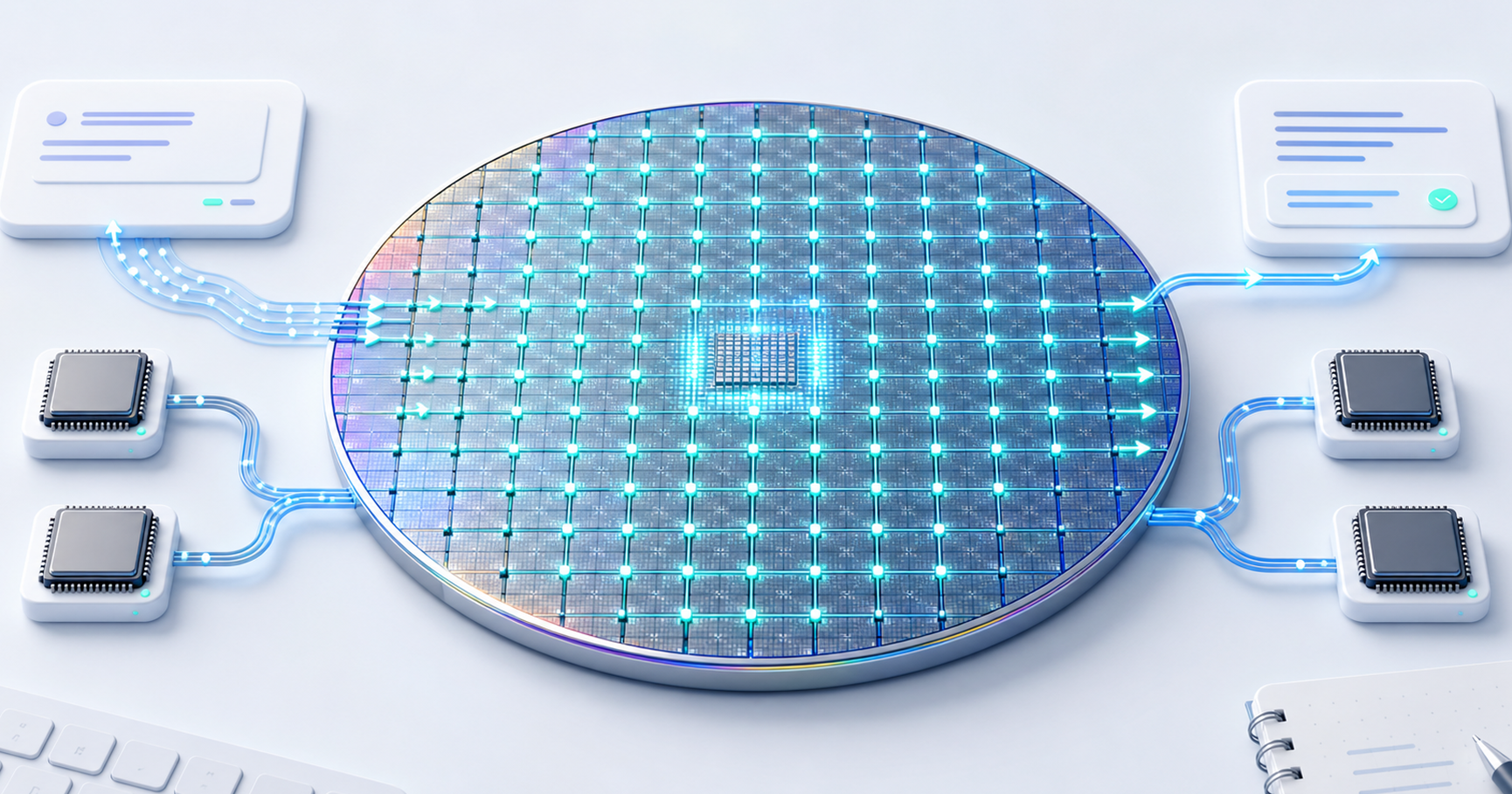
AI performance depends on more than model quality. Cerebras uses a wafer-scale processor to reduce data movement and make training and inference faster.
Most conversations about artificial intelligence focus on models: how many parameters they contain, how well they reason, and which benchmarks they lead. Yet even a highly capable model can feel ineffective when every response takes too long, an agent pauses between actions, or a coding assistant cannot keep pace with its user.
Cerebras Systems approaches this problem differently from conventional AI-chip companies. Instead of connecting hundreds or thousands of relatively small processors, Cerebras builds one processor from almost an entire silicon wafer.
Its central argument is simple:
AI computing is often limited not only by arithmetic, but by the cost of moving data between processors and memory.
Cerebras attempts to reduce that movement by putting an unusually large amount of compute, memory, and communication bandwidth onto one enormous chip.
Specifications, partnerships, services, and benchmark snapshots in this article were checked against publicly available sources on July 22, 2026.
What Is Cerebras?
Cerebras is an AI infrastructure company best known for developing the Wafer-Scale Engine, or WSE.
The third-generation WSE-3 powers the company’s CS-3 AI system. According to the Cerebras product specifications and CS-3 system page, the processor contains:
| Specification | WSE-3 |
|---|---|
| Silicon area | 46,225 mm² |
| Transistors | 4 trillion |
| AI-optimized cores | 900,000 |
| Peak AI performance | 125 petaflops |
| On-chip SRAM | 44 GB |
| Memory bandwidth | 21 petabytes per second |
| Fabric bandwidth | 214 petabits per second |
These are not the specifications of a conventional GPU. The WSE-3 occupies most of a 300 mm silicon wafer and is many times larger than an individual GPU die.
Cerebras offers this architecture in several forms:
- CS-3 systems for private AI and high-performance computing infrastructure
- Training clusters for large-model development
- Cerebras Inference Cloud for accessing models through an API
- Developer SDKs for AI, scientific computing, and custom wafer-scale programs
The company therefore competes not only as a chip designer but also as a full-stack AI infrastructure provider.
The Basic Idea: Stop Cutting the Wafer into Small Chips
Semiconductor manufacturers normally produce many individual chips on one silicon wafer. The wafer is divided into rectangular dies, which are cut apart, packaged, and installed in servers.
This approach has several advantages. Smaller chips are easier to manufacture, defective dies can be discarded, and systems can expand by adding more processors.
The disadvantage appears when a workload must be divided across many chips.
Large AI models require processors to exchange weights, activations, gradients, attention states, and other intermediate results. Data travelling inside one chip can move very quickly. Data travelling between separate chips must pass through packaging, switches, networking hardware, or external memory.
Technologies such as NVLink, InfiniBand, and high-bandwidth memory reduce this cost, but they cannot make off-chip communication identical to communication inside a processor.
Cerebras keeps the wafer largely intact and connects hundreds of thousands of small processing cores through an on-wafer communication fabric. This creates a much larger computational domain before a workload must cross a chip boundary.
The WSE should therefore not be understood simply as an oversized GPU. It is a spatial, dataflow-oriented architecture designed for highly parallel workloads.
Why Wasn’t One Giant Chip Practical Before?
The traditional obstacle is manufacturing yield.
Microscopic defects inevitably occur during semiconductor production. On a small processor, one defect might ruin one die while leaving dozens of other dies on the wafer usable. On a wafer-sized processor, it would seem that almost every wafer should contain at least one defect and therefore fail.
Cerebras addresses this through redundancy and fault tolerance.
The WSE contains very small compute cores, spare cores, and redundant communication paths. During manufacturing and system configuration, defective sections can be disabled, while the routing fabric directs data around them.
Cerebras says the WSE-3 physically contains approximately 970,000 cores, with 900,000 activated in the shipping product. Because each core occupies a small area, one isolated defect disables only a small fraction of the processor. The company explains this design in its article on how it addressed wafer-scale yield.
This defect-tolerant design is one of the company’s most important engineering achievements. Without it, commercial wafer-scale processors would be economically impractical.
Cerebras Compared with a GPU Cluster
A simplified comparison looks like this:
| Area | Cerebras WSE system | Conventional GPU cluster |
|---|---|---|
| Compute topology | One wafer-scale processor per system | Many separate GPU processors |
| Local memory | Distributed SRAM across the wafer | Cache and HBM attached to each GPU |
| Internal communication | On-wafer mesh fabric | On-chip fabric plus GPU interconnects and networking |
| Scaling approach | Scale up within the wafer, then scale across systems | Scale primarily by connecting more GPUs |
| Model partitioning | Designed to reduce complex model sharding | Often uses tensor, pipeline, expert, and data parallelism |
| Main strengths | Low latency and very high communication bandwidth | Flexibility, mature tooling, and broad workload support |
| Main constraint | Specialized architecture and platform | Communication and synchronization overhead at large scale |
This does not mean one CS-3 universally replaces a specific number of GPUs. Performance depends on model architecture, batch size, precision, context length, software implementation, and whether the objective is latency, throughput, training time, power, or total cost.
The more defensible conclusion is that Cerebras targets a different architectural balance. It gives up some of the modularity of small processors to obtain much greater on-chip scale and bandwidth.
On-Chip Memory Does Not Mean the Whole Model Must Fit on the Chip
The WSE-3 contains 44 GB of distributed SRAM. That is a large amount of extremely fast on-chip memory, but it is not enough to store every parameter of today’s largest models.
Cerebras addresses this through an execution method called weight streaming.
Instead of keeping all model weights permanently inside the processor, weights can be supplied to the wafer as computation progresses. The WSE focuses on processing activations and executing the computational graph, while external memory systems manage the complete model state.
This separation allows Cerebras systems to train models much larger than the WSE’s local SRAM capacity. In the company’s weight-streaming cluster architecture, model weights are streamed layer by layer from a large-capacity MemoryX service and broadcast to each WSE.
The approach also changes the usual model-parallelism problem. In a conventional GPU cluster, engineers may need to divide individual layers across multiple devices. Cerebras attempts to keep more of each operation inside the wafer and uses data parallelism or weight streaming when scaling beyond one system.
Why Cerebras Is Focusing on Inference
Cerebras was initially associated primarily with large-model training and scientific computing. More recently, high-speed inference has become a major part of its business.
Inference is the process of running an already-trained model to produce an answer, generate code, call a tool, analyze an image, or make a decision.
For a traditional chatbot, moderate latency may be acceptable. For newer AI products, latency becomes a structural limitation.
Consider an autonomous research agent:
- It generates a search query.
- It examines the results.
- It chooses a source.
- It extracts information.
- It evaluates whether more evidence is required.
- It repeats the process.
- It writes the final response.
A delay during each model call accumulates across the entire workflow. Reducing inference time can therefore shorten a multi-step task by considerably more than the time saved on one response.
The same principle applies to:
- Real-time coding assistants
- Voice agents
- Robotic systems
- Interactive simulations
- AI search engines
- Tool-using agents
- Long-running reasoning systems
- Enterprise workflow automation
Fast inference is not merely about displaying text more quickly. It lets an application perform more reasoning and more tool calls within the same user-facing time limit.
How Fast Is Cerebras?
Cerebras advertises inference performance many times faster than conventional GPU-based services. Vendor comparisons must be treated cautiously because results change with the model and test conditions.
Independent measurements nevertheless indicate unusually high output speeds. On July 22, 2026, Artificial Analysis’s Cerebras provider page showed its gpt-oss-120b high- and low-reasoning configurations at roughly 1,900 output tokens per second, with Gemma 4 31B around 1,500 tokens per second.
Artificial Analysis defines output speed as the rate at which tokens are received after generation begins and reports recent median measurements. These figures are snapshots, not permanent specifications. Provider load, model updates, quantization, context length, reasoning settings, and API configuration can all affect real performance.
Even with those caveats, output rates measured in the thousands of tokens per second create a materially different interaction from systems generating tens of tokens per second.
Using Cerebras as a Developer
Developers do not need physical access to a CS-3 system. Cerebras provides hosted inference through its cloud API.
Its API is described as mostly compatible with OpenAI client libraries. An existing application can often be redirected by changing its API key and base URL.
A simplified TypeScript example looks like this:
import OpenAI from "openai";

const client = new OpenAI({
  apiKey: process.env.CEREBRAS_API_KEY,
  baseURL: "https://api.cerebras.ai/v1",
});

const response = await client.chat.completions.create({
  model: "gpt-oss-120b",
  messages: [
    {
      role: "user",
      content: "Explain wafer-scale computing in simple terms.",
    },
  ],
});

console.log(response.choices[0].message.content);
Cerebras also provides dedicated Python and TypeScript SDKs. The OpenAI compatibility documentation shows the supported client configuration and the differences that require attention.
“Mostly compatible” is an important qualification. Some message roles, tool-calling combinations, structured-output parameters, and model-specific options behave differently. Migrating an application therefore requires testing rather than merely changing the endpoint.
Cerebras and OpenAI
A significant validation of the architecture arrived in January 2026, when OpenAI announced a partnership with Cerebras.
OpenAI said it would add 750 megawatts of Cerebras compute capacity to its platform, with deployment occurring in stages through 2028. OpenAI described Cerebras as a specialized, low-latency component within a broader and more resilient compute portfolio.
This distinction is important.
The agreement does not indicate that OpenAI intends to replace all GPUs with Cerebras systems. Instead, it suggests that future AI infrastructure may become increasingly heterogeneous:
- GPUs for some training and general-purpose workloads
- Custom accelerators for internal models
- Specialized inference processors for latency-sensitive applications
- Different systems selected according to model size, workload, cost, and geographic requirements
The likely future is not one processor replacing every other processor. It is a portfolio of architectures optimized for different stages of AI computation.
Cerebras in South Korea
Cerebras is also expanding its presence in the Korean AI market.
On July 10, 2026, the company announced a collaboration with Korean AI company Upstage. Cerebras said Upstage’s Solar 31B model could reach inference speeds of up to 2,000 tokens per second on its infrastructure.
The companies are examining enterprise applications involving document intelligence, financial services, insurance, healthcare, manufacturing, and workflow automation. The announcement is available in Cerebras’s Upstage partnership article.
This partnership is notable because Korea has strong demand for Korean-language enterprise models and strict requirements involving data residency, security, latency, and integration with existing business systems.
Whether the collaboration develops into substantial production deployments remains to be seen. At minimum, it shows Cerebras trying to move beyond benchmark demonstrations and into regional enterprise AI infrastructure.
Cerebras Is Not Automatically Better for Every Workload
The WSE architecture is technically distinctive, but several limitations should remain in view.
1. Model quality and hardware speed are different variables
Cerebras can run an open model extremely quickly, but the hardware does not automatically make that model as capable as a more advanced proprietary model.
Users must evaluate both:
- How good the model is
- How efficiently the provider serves it
A slower but substantially more capable model may still be the correct choice for a difficult task.
2. Performance claims are workload-specific
“Faster than GPUs” is too broad to be meaningful without details.
A useful comparison needs to specify:
- The exact model
- Input and output lengths
- Batch size
- Precision and quantization
- Time to first token
- Output-token speed
- Concurrent user count
- Quality settings
- Hardware quantity
- Power use
- Total operating cost
A system optimized for single-user latency may not lead in high-volume batch throughput, and the reverse may also be true.
3. Compatibility is not complete portability
Cerebras supports familiar APIs and frameworks, but its architecture is not identical to CUDA-based infrastructure. Applications relying on unsupported models, specialized kernels, unusual parameters, or custom GPU libraries may require additional work.
4. The complete system matters
An AI processor is only one part of an operational platform. Networking, power delivery, cooling, model deployment, observability, security, reliability, and developer tooling determine whether theoretical performance becomes production value.
Wafer-scale computing also keeps manufacturing, power, thermal management, programming models, and compiler support central to the engineering challenge.
Why Cerebras Matters
Cerebras matters because it questions one of the semiconductor industry’s most established assumptions: that a wafer must be divided into many independent processors.
Its argument is that AI workloads have become large and communication-intensive enough to justify a different physical architecture.
The WSE does not eliminate every bottleneck, and it will not make conventional GPUs obsolete. GPUs remain highly flexible, widely available, and supported by an extensive software ecosystem.
However, Cerebras demonstrates that wafer-scale processors are no longer merely an experimental concept. They can be manufactured, deployed as production systems, exposed through developer APIs, and used for both AI and high-performance computing.
The most important idea behind Cerebras is therefore not simply that it built the world’s largest commercial AI chip.
It is that the physical distance between computation and data has become one of the defining constraints of artificial intelligence.
Cerebras is betting that reducing that distance can make AI systems not only faster, but fundamentally more interactive.
Sources
AI 성능은 모델 품질만으로 결정되지 않습니다. Cerebras는 웨이퍼 크기의 프로세서로 데이터 이동을 줄여 학습과 추론 속도를 높입니다.
인공지능에 관한 대화는 대부분 모델에 집중합니다. 파라미터가 몇 개인지, 얼마나 잘 추론하는지, 어떤 벤치마크에서 앞서는지가 주된 관심사입니다. 그러나 뛰어난 모델도 응답이 너무 오래 걸리고, 에이전트가 동작 사이마다 멈추거나, 코딩 도우미가 사용자의 속도를 따라오지 못하면 무력하게 느껴질 수 있습니다.
Cerebras Systems는 기존 AI 칩 기업과 다른 방식으로 이 문제에 접근합니다. 비교적 작은 프로세서 수백·수천 개를 연결하는 대신, 실리콘 웨이퍼 거의 전체를 하나의 프로세서로 만듭니다.
핵심 주장은 간단합니다.
AI 컴퓨팅은 연산 능력뿐 아니라 프로세서와 메모리 사이에서 데이터를 옮기는 비용에도 크게 제한됩니다.
Cerebras는 막대한 연산 자원, 메모리, 통신 대역폭을 하나의 거대한 칩에 배치해 이러한 이동을 줄이려 합니다.
이 글의 사양, 파트너십, 서비스, 벤치마크 수치는 2026년 7월 22일 공개 자료를 기준으로 확인했습니다.
Cerebras란?
Cerebras는 Wafer-Scale Engine, 줄여서 WSE를 개발한 것으로 잘 알려진 AI 인프라 기업입니다.
3세대 WSE-3는 회사의 CS-3 AI 시스템을 구동합니다. Cerebras 제품 사양과 CS-3 시스템 페이지에 따르면 프로세서 사양은 다음과 같습니다.
| 사양 | WSE-3 |
|---|---|
| 실리콘 면적 | 46,225 mm² |
| 트랜지스터 | 4조 개 |
| AI 최적화 코어 | 900,000개 |
| 최대 AI 성능 | 125 페타플롭스 |
| 온칩 SRAM | 44 GB |
| 메모리 대역폭 | 초당 21 페타바이트 |
| 패브릭 대역폭 | 초당 214 페타비트 |
이는 일반적인 GPU의 사양이 아닙니다. WSE-3는 300mm 실리콘 웨이퍼 대부분을 차지하며, 개별 GPU 다이보다 훨씬 큽니다.
Cerebras는 이 아키텍처를 여러 형태로 제공합니다.
- 사설 AI 및 고성능 컴퓨팅 인프라용 CS-3 시스템
- 대규모 모델 개발용 학습 클러스터
- API로 모델을 사용하는 Cerebras Inference Cloud
- AI·과학 컴퓨팅·웨이퍼 스케일 프로그램용 개발자 SDK
따라서 Cerebras는 칩 설계사일 뿐 아니라 풀스택 AI 인프라 공급자로 경쟁합니다.
기본 발상: 웨이퍼를 작은 칩으로 자르지 않는다
반도체 제조사는 일반적으로 하나의 실리콘 웨이퍼에서 여러 개의 개별 칩을 만듭니다. 웨이퍼를 사각형 다이로 나누고, 잘라서 패키징한 뒤 서버에 장착합니다.
이 방식에는 장점이 많습니다. 작은 칩은 제조가 쉽고, 결함이 있는 다이만 버릴 수 있으며, 프로세서를 더 추가해 시스템을 확장할 수 있습니다.
단점은 하나의 작업을 여러 칩에 나눠야 할 때 나타납니다.
대규모 AI 모델은 프로세서 사이에서 가중치, 활성값, 그래디언트, 어텐션 상태와 여러 중간 결과를 교환해야 합니다. 한 칩 내부의 데이터는 매우 빠르게 움직이지만, 서로 다른 칩 사이의 데이터는 패키지, 스위치, 네트워크 장비 또는 외부 메모리를 거쳐야 합니다.
NVLink, InfiniBand, 고대역폭 메모리 같은 기술은 이 비용을 줄여 주지만, 칩 밖의 통신을 프로세서 내부 통신과 완전히 같게 만들 수는 없습니다.
Cerebras는 웨이퍼를 대부분 온전하게 유지하고 수십만 개의 작은 처리 코어를 웨이퍼 위 통신 패브릭으로 연결합니다. 그 결과 작업이 칩 경계를 넘기 전에 훨씬 큰 연산 영역을 사용할 수 있습니다.
따라서 WSE를 단순히 큰 GPU로 이해해서는 안 됩니다. 대규모 병렬 작업을 위한 공간적 데이터플로 아키텍처에 가깝습니다.
왜 이전에는 거대한 단일 칩이 실용적이지 않았을까?
전통적인 장애물은 제조 수율입니다.
반도체 생산 중에는 미세한 결함이 불가피하게 생깁니다. 작은 프로세서에서는 결함 하나가 다이 하나만 망가뜨리고 웨이퍼의 나머지 다이는 사용할 수 있습니다. 웨이퍼 크기의 프로세서라면 거의 모든 웨이퍼에 결함이 하나 이상 있어 전체가 실패할 것처럼 보입니다.
Cerebras는 중복성과 내결함성으로 이 문제를 다룹니다.
WSE에는 매우 작은 연산 코어, 예비 코어, 중복 통신 경로가 있습니다. 제조와 시스템 설정 과정에서 결함 구역을 비활성화하고, 라우팅 패브릭이 그 구역을 우회하도록 할 수 있습니다.
Cerebras에 따르면 WSE-3에는 물리적으로 약 97만 개의 코어가 있고, 출하 제품에서는 그중 90만 개가 활성화됩니다. 코어 하나가 차지하는 면적이 작기 때문에 고립된 결함은 프로세서의 극히 일부만 비활성화합니다. 자세한 원리는 웨이퍼 스케일 수율 문제 해결 글에서 설명합니다.
이 내결함 설계는 회사의 가장 중요한 공학적 성과 중 하나입니다. 이것이 없다면 상용 웨이퍼 스케일 프로세서는 경제성을 확보하기 어렵습니다.
Cerebras와 GPU 클러스터 비교
단순화해 비교하면 다음과 같습니다.
| 영역 | Cerebras WSE 시스템 | 일반적인 GPU 클러스터 |
|---|---|---|
| 연산 토폴로지 | 시스템당 웨이퍼 스케일 프로세서 하나 | 여러 개의 독립 GPU |
| 로컬 메모리 | 웨이퍼 전체에 분산된 SRAM | 각 GPU에 연결된 캐시와 HBM |
| 내부 통신 | 웨이퍼 위 메시 패브릭 | 온칩 패브릭, GPU 인터커넥트, 네트워크 |
| 확장 방식 | 웨이퍼 내부에서 먼저 스케일업한 뒤 시스템 간 확장 | 주로 GPU를 더 연결해 확장 |
| 모델 분할 | 복잡한 모델 샤딩을 줄이도록 설계 | 텐서·파이프라인·전문가·데이터 병렬화 사용 |
| 주요 강점 | 낮은 지연과 매우 높은 통신 대역폭 | 유연성, 성숙한 도구, 폭넓은 워크로드 |
| 주요 제약 | 특수한 아키텍처와 플랫폼 | 대규모 통신·동기화 오버헤드 |
CS-3 한 대가 언제나 특정 수의 GPU를 대체한다는 뜻은 아닙니다. 성능은 모델 구조, 배치 크기, 정밀도, 컨텍스트 길이, 소프트웨어 구현과 목표가 지연 시간인지 처리량인지, 학습 시간인지 전력·총비용인지에 따라 달라집니다.
더 타당한 결론은 Cerebras가 다른 아키텍처적 균형을 선택했다는 것입니다. 작은 프로세서의 모듈성을 일부 포기하는 대신, 훨씬 큰 온칩 규모와 대역폭을 얻습니다.
온칩 메모리가 모든 모델을 칩에 넣는다는 뜻은 아니다
WSE-3에는 44GB의 분산 SRAM이 있습니다. 매우 빠른 온칩 메모리로서는 큰 용량이지만, 오늘날 가장 큰 모델의 모든 파라미터를 저장하기에는 부족합니다.
Cerebras는 weight streaming이라는 실행 방식으로 이 문제를 해결합니다.
모델 가중치 전체를 프로세서 안에 계속 보관하지 않고, 연산이 진행되는 동안 웨이퍼에 공급합니다. WSE는 활성값 처리와 연산 그래프 실행에 집중하고, 외부 메모리 시스템은 전체 모델 상태를 관리합니다.
이 분리 덕분에 Cerebras 시스템은 WSE의 로컬 SRAM보다 훨씬 큰 모델을 학습할 수 있습니다. 회사의 weight-streaming 클러스터 구조에서는 대용량 MemoryX 서비스가 가중치를 레이어별로 스트리밍해 각 WSE에 브로드캐스트합니다.
이 접근은 일반적인 모델 병렬화 문제도 바꿉니다. GPU 클러스터에서는 개별 레이어를 여러 장치에 나눠야 할 수 있지만, Cerebras는 각 연산을 가능한 한 웨이퍼 내부에 유지하고 시스템 수를 늘릴 때 데이터 병렬화 또는 weight streaming을 사용합니다.
Cerebras가 추론에 집중하는 이유
Cerebras는 처음에는 대규모 모델 학습과 과학 컴퓨팅으로 주로 알려졌지만, 최근에는 고속 추론이 사업의 중요한 부분이 됐습니다.
추론은 이미 학습된 모델을 실행해 답변이나 코드를 생성하고, 도구를 호출하고, 이미지를 분석하거나 결정을 내리는 과정입니다.
전통적인 챗봇에서는 중간 정도의 지연을 받아들일 수 있지만, 새로운 AI 제품에서는 지연 시간이 구조적인 제약이 됩니다.
자율 리서치 에이전트를 예로 들어 보겠습니다.
- 검색어를 생성합니다.
- 결과를 살펴봅니다.
- 출처를 선택합니다.
- 정보를 추출합니다.
- 증거가 더 필요한지 판단합니다.
- 과정을 반복합니다.
- 최종 답변을 작성합니다.
각 모델 호출의 지연은 전체 워크플로에 누적됩니다. 따라서 추론 시간을 줄이면 한 번의 응답에서 절약한 시간보다 다단계 작업 전체를 훨씬 더 크게 단축할 수 있습니다.
같은 원리는 다음 영역에도 적용됩니다.
- 실시간 코딩 도우미
- 음성 에이전트
- 로봇 시스템
- 인터랙티브 시뮬레이션
- AI 검색 엔진
- 도구 사용 에이전트
- 장시간 추론 시스템
- 기업 워크플로 자동화
빠른 추론은 단순히 글자를 더 빨리 보여 주는 문제가 아닙니다. 같은 사용자 대기 시간 안에 더 많은 추론과 도구 호출을 수행하게 해 줍니다.
Cerebras는 얼마나 빠른가?
Cerebras는 기존 GPU 기반 서비스보다 여러 배 빠른 추론 성능을 홍보합니다. 다만 공급자 비교 결과는 모델과 시험 조건에 따라 크게 바뀌므로 주의해서 봐야 합니다.
그럼에도 독립 측정에서는 이례적으로 높은 출력 속도가 확인됩니다. 2026년 7월 22일 Artificial Analysis의 Cerebras 공급자 페이지는 gpt-oss-120b의 high·low 추론 구성을 초당 약 1,900 출력 토큰, Gemma 4 31B를 초당 약 1,500 토큰 수준으로 표시했습니다.
Artificial Analysis는 생성이 시작된 뒤 수신되는 토큰의 속도를 출력 속도로 정의하고 최근 중앙값을 표시합니다. 이 숫자는 영구 사양이 아니라 특정 시점의 스냅샷입니다. 공급자 부하, 모델 업데이트, 양자화, 컨텍스트 길이, 추론 설정, API 구성에 따라 실제 성능은 달라질 수 있습니다.
이러한 제약을 고려해도 초당 수천 토큰에 가까운 출력은 수십 토큰을 생성하는 시스템과 체감이 크게 다릅니다.
개발자가 Cerebras를 사용하는 방법
개발자가 실제 CS-3 시스템을 보유할 필요는 없습니다. Cerebras는 클라우드 API를 통해 호스팅 추론을 제공합니다.
API는 OpenAI 클라이언트 라이브러리와 대부분 호환되는 것으로 설명됩니다. 기존 애플리케이션은 API 키와 base URL을 바꾸는 것만으로 전환할 수 있는 경우가 많습니다.
간단한 TypeScript 예시는 다음과 같습니다.
import OpenAI from "openai";

const client = new OpenAI({
  apiKey: process.env.CEREBRAS_API_KEY,
  baseURL: "https://api.cerebras.ai/v1",
});

const response = await client.chat.completions.create({
  model: "gpt-oss-120b",
  messages: [
    {
      role: "user",
      content: "Explain wafer-scale computing in simple terms.",
    },
  ],
});

console.log(response.choices[0].message.content);
Cerebras는 전용 Python 및 TypeScript SDK도 제공합니다. OpenAI 호환성 문서에서 클라이언트 설정과 주의할 차이를 확인할 수 있습니다.
“대부분 호환”이라는 표현은 중요합니다. 일부 메시지 role, 도구 호출 조합, 구조화 출력 파라미터, 모델별 옵션은 다르게 작동합니다. 따라서 애플리케이션 이전은 엔드포인트만 바꾸는 것으로 끝내지 말고 반드시 테스트해야 합니다.
Cerebras와 OpenAI
2026년 1월 OpenAI가 Cerebras와 파트너십을 발표하면서 이 아키텍처는 중요한 검증 사례를 얻었습니다.
OpenAI는 플랫폼에 750MW 규모의 Cerebras 컴퓨팅 용량을 추가하고, 2028년까지 단계적으로 배치하겠다고 밝혔습니다. OpenAI는 Cerebras를 더 폭넓고 안정적인 컴퓨팅 포트폴리오 안의 특화된 저지연 구성 요소로 설명했습니다.
이 구분은 중요합니다.
계약이 모든 GPU를 Cerebras 시스템으로 교체한다는 의미는 아닙니다. 오히려 미래 AI 인프라가 더욱 이기종화될 가능성을 보여 줍니다.
- 일부 학습 및 범용 작업용 GPU
- 내부 모델용 맞춤형 가속기
- 지연에 민감한 애플리케이션용 특화 추론 프로세서
- 모델 크기, 워크로드, 비용, 지역 조건에 따른 시스템 선택
미래는 하나의 프로세서가 나머지를 모두 대체하는 모습보다, AI 연산 단계별로 최적화된 여러 아키텍처의 포트폴리오에 가까울 가능성이 큽니다.
한국의 Cerebras
Cerebras는 한국 AI 시장에서도 입지를 넓히고 있습니다.
2026년 7월 10일 Cerebras는 한국 AI 기업 Upstage와의 협력을 발표했습니다. 회사 발표에 따르면 Upstage의 Solar 31B 모델은 Cerebras 인프라에서 초당 최대 2,000 토큰의 추론 속도를 낼 수 있습니다.
두 회사는 문서 지능, 금융, 보험, 의료, 제조, 워크플로 자동화 등 기업용 애플리케이션을 검토하고 있습니다. 자세한 내용은 Cerebras의 Upstage 파트너십 발표에서 확인할 수 있습니다.
한국은 한국어 기업 모델 수요가 크면서도 데이터 주권, 보안, 지연 시간, 기존 업무 시스템과의 통합 요구가 엄격하다는 점에서 이 협력은 주목할 만합니다.
실질적인 대규모 운영 배치로 이어질지는 더 지켜봐야 합니다. 최소한 Cerebras가 벤치마크 시연을 넘어 지역 기업용 AI 인프라로 확장하려 한다는 점은 보여 줍니다.
Cerebras가 모든 작업에 자동으로 더 좋은 것은 아니다
WSE 아키텍처는 독특하지만 몇 가지 제약을 함께 봐야 합니다.
1. 모델 품질과 하드웨어 속도는 서로 다른 변수다
Cerebras는 오픈 모델을 매우 빠르게 실행할 수 있지만, 하드웨어 속도가 그 모델을 더 발전된 독점 모델만큼 유능하게 만들어 주는 것은 아닙니다.
사용자는 두 가지를 모두 평가해야 합니다.
- 모델 자체가 얼마나 좋은가
- 공급자가 모델을 얼마나 효율적으로 제공하는가
어려운 작업에서는 느리더라도 훨씬 뛰어난 모델이 올바른 선택일 수 있습니다.
2. 성능 주장은 워크로드에 따라 달라진다
세부 조건 없이 “GPU보다 빠르다”는 말은 의미가 지나치게 넓습니다.
유용한 비교에는 다음 조건이 필요합니다.
- 정확한 모델
- 입력·출력 길이
- 배치 크기
- 정밀도와 양자화
- 첫 토큰까지의 시간
- 출력 토큰 속도
- 동시 사용자 수
- 품질 설정
- 하드웨어 수량
- 전력 사용량
- 총운영비용
단일 사용자 지연에 최적화된 시스템이 대량 배치 처리량에서도 선두라는 보장은 없으며, 그 반대도 마찬가지입니다.
3. 호환성이 완전한 이식성을 뜻하지는 않는다
Cerebras는 익숙한 API와 프레임워크를 지원하지만, CUDA 기반 인프라와 동일한 아키텍처는 아닙니다. 지원되지 않는 모델, 특수 커널, 이례적인 파라미터, 맞춤형 GPU 라이브러리에 의존하는 애플리케이션은 추가 작업이 필요할 수 있습니다.
4. 전체 시스템이 중요하다
AI 프로세서는 운영 플랫폼의 한 부분일 뿐입니다. 네트워크, 전력 공급, 냉각, 모델 배포, 관측성, 보안, 신뢰성, 개발자 도구가 이론적 성능을 실제 운영 가치로 바꿀 수 있는지를 결정합니다.
웨이퍼 스케일 컴퓨팅에서도 제조, 전력, 열 관리, 프로그래밍 모델, 컴파일러 지원은 여전히 핵심 공학 과제입니다.
Cerebras가 중요한 이유
Cerebras가 중요한 이유는 웨이퍼를 여러 독립 프로세서로 나눠야 한다는 반도체 업계의 오래된 가정에 의문을 제기하기 때문입니다.
AI 워크로드가 크고 통신 집약적으로 변했기 때문에 다른 물리적 아키텍처가 정당화된다는 것이 Cerebras의 주장입니다.
WSE가 모든 병목을 없애거나 일반 GPU를 사라지게 하지는 않을 것입니다. GPU는 여전히 유연하고 널리 이용할 수 있으며 방대한 소프트웨어 생태계의 지원을 받습니다.
하지만 Cerebras는 웨이퍼 스케일 프로세서가 더 이상 실험적 개념에 머물지 않는다는 것을 보여 줍니다. 실제로 제조하고, 운영 시스템으로 배치하고, 개발자 API로 제공하며, AI와 고성능 컴퓨팅에 사용할 수 있습니다.
따라서 Cerebras의 가장 중요한 의미는 단순히 세계에서 가장 큰 상용 AI 칩을 만들었다는 데 있지 않습니다.
핵심은 연산과 데이터 사이의 물리적 거리가 인공지능을 규정하는 중요한 제약 중 하나가 됐다는 점입니다.
Cerebras는 이 거리를 줄이면 AI 시스템을 더 빠르게 만들 뿐 아니라 근본적으로 더 인터랙티브하게 만들 수 있다고 베팅하고 있습니다.
출처
AI 性能不只取决于模型质量。Cerebras 通过晶圆级处理器减少数据搬运,从而提升模型训练与推理速度。
谈到人工智能,人们往往首先关注模型:参数量有多大、推理能力有多强、在哪些基准测试中领先。然而,即使模型能力出众,如果每次回答都要等待太久、智能体每执行一步都要停顿,或编程助手跟不上用户的节奏,实际体验依然会大打折扣。
Cerebras Systems 采用了与传统 AI 芯片公司不同的思路。它没有连接数百乃至数千颗相对较小的处理器,而是用几乎一整片硅晶圆制造一颗处理器。
其核心观点很简单:
AI 计算的瓶颈往往不只在算术运算,还在处理器与内存之间搬运数据的成本。
Cerebras 试图把大量计算单元、内存与通信带宽集中到一颗巨型芯片上,以减少这种数据移动。
本文中的规格、合作关系、服务信息与基准测试快照,均依据截至 2026 年 7 月 22 日公开可查的资料核对。
Cerebras 是什么?
Cerebras 是一家 AI 基础设施公司,以开发 **Wafer-Scale Engine(WSE,晶圆级引擎)**而闻名。
第三代 WSE-3 是该公司 CS-3 AI 系统的核心。根据 Cerebras 产品规格与 CS-3 系统页面,这颗处理器具有:
| 规格 | WSE-3 |
|---|---|
| 硅片面积 | 46,225 mm² |
| 晶体管 | 4 万亿 |
| AI 优化核心 | 900,000 |
| AI 峰值性能 | 125 petaflops |
| 片上 SRAM | 44 GB |
| 内存带宽 | 每秒 21 PB |
| 互连带宽 | 每秒 214 Pb |
这些并不是传统 GPU 的规格。WSE-3 占据了一片 300 mm 硅晶圆的大部分面积,尺寸远大于单颗 GPU 裸片。
Cerebras 以多种形式提供这套架构:
- 面向私有 AI 与高性能计算基础设施的 CS-3 系统
- 面向大模型开发的训练集群
- 通过 API 调用模型的 Cerebras Inference Cloud
- 面向 AI、科学计算与自定义晶圆级程序的开发者 SDK
因此,Cerebras 不只是芯片设计公司,也是一家全栈 AI 基础设施提供商。
基本思路:不再把晶圆切成小芯片
半导体制造商通常会在一片硅晶圆上生产许多独立芯片。晶圆被划分为矩形裸片,随后切割、封装并安装到服务器中。
这种方式有明显优势:小芯片更容易制造,存在缺陷的裸片可以丢弃,系统也能通过增加处理器扩展。
但当一项工作必须拆分到多颗芯片上时,劣势便会出现。
大型 AI 模型需要处理器交换权重、激活值、梯度、注意力状态及其他中间结果。数据在一颗芯片内部可以非常快地移动;跨芯片传输时,则必须经过封装、交换机、网络硬件或外部内存。
NVLink、InfiniBand 和高带宽内存等技术可以降低这项成本,却无法让片外通信与处理器内部通信完全等同。
Cerebras 基本保留整片晶圆,并通过晶圆上的通信网络连接数十万个微型处理核心。这样,在工作负载必须跨越芯片边界之前,就能获得更大的计算域。
因此,WSE 不应只被理解为一颗超大 GPU。它是一种为空间化、数据流式执行而设计的架构,目标是高度并行的工作负载。
为什么过去难以制造一颗巨型芯片?
传统障碍是制造良率。
半导体生产中不可避免会出现微观缺陷。对于小型处理器,一个缺陷可能只会报废一颗裸片,而同一晶圆上的其他几十颗裸片仍能使用。若处理器与晶圆一样大,似乎几乎每片晶圆都会至少出现一个缺陷,进而导致整颗处理器失效。
Cerebras 通过冗余与容错设计解决这一问题。
WSE 包含非常小的计算核心、备用核心与冗余通信路径。在制造和系统配置阶段,可以停用存在缺陷的区域,并让路由网络绕过这些区域传输数据。
Cerebras 表示,WSE-3 在物理上约有 970,000 个核心,其中量产产品启用 900,000 个。由于每个核心占用面积很小,局部缺陷只会停用处理器的一小部分。该公司在晶圆级良率解决方案中详细介绍了这套设计。
这种容错机制是 Cerebras 最重要的工程成果之一。没有它,商业化晶圆级处理器在经济上难以成立。
Cerebras 与 GPU 集群对比
简化后的对比如下:
| 维度 | Cerebras WSE 系统 | 传统 GPU 集群 |
|---|---|---|
| 计算拓扑 | 每套系统一颗晶圆级处理器 | 多颗独立 GPU |
| 本地内存 | 分布在晶圆上的 SRAM | 每颗 GPU 附带缓存与 HBM |
| 内部通信 | 晶圆上网格互连 | 片上互连加 GPU 互连与网络 |
| 扩展方式 | 先在晶圆内纵向扩展,再跨系统扩展 | 主要通过连接更多 GPU 扩展 |
| 模型切分 | 旨在减少复杂的模型分片 | 常用张量、流水线、专家与数据并行 |
| 主要优势 | 低延迟与极高通信带宽 | 灵活、工具成熟、工作负载覆盖广 |
| 主要限制 | 专用架构与平台 | 大规模下的通信和同步开销 |
这并不意味着一套 CS-3 可以普遍替代某个固定数量的 GPU。性能取决于模型架构、批量大小、精度、上下文长度、软件实现,以及优化目标究竟是延迟、吞吐量、训练时间、功耗还是总体成本。
更稳妥的结论是:Cerebras 选择了不同的架构平衡。它牺牲了小型处理器的一部分模块化优势,以换取更大的片上规模与带宽。
片上内存并不意味着整个模型必须装进芯片
WSE-3 配有 44 GB 分布式 SRAM。这是一笔非常可观、速度极快的片上内存,但仍不足以存储当今最大模型的全部参数。
Cerebras 通过一种称为 **weight streaming(权重流式传输)**的执行方式解决这个问题。
模型权重无需永久驻留在处理器中,而可以随着计算进程送入晶圆。WSE 专注于处理激活值并执行计算图,外部内存系统则管理完整的模型状态。
这种分工使 Cerebras 系统能够训练远大于 WSE 本地 SRAM 容量的模型。在该公司的权重流式集群架构中,模型权重由大容量 MemoryX 服务逐层流式传输,并广播到每颗 WSE。
它也改变了传统模型并行问题。在普通 GPU 集群中,工程师可能需要把单个网络层拆到多台设备上;Cerebras 则试图让每项操作尽量留在晶圆内部,只有在扩展到多套系统时才使用数据并行或权重流式传输。
Cerebras 为什么聚焦推理?
Cerebras 最初主要与大模型训练和科学计算联系在一起。近来,高速推理已成为其业务的重要组成部分。
推理是运行已训练模型以生成回答、编写代码、调用工具、分析图像或作出决策的过程。
对于传统聊天机器人,中等程度的延迟或许可以接受;对于新一代 AI 产品,延迟却会成为结构性限制。
以自主研究智能体为例:
- 生成搜索查询。
- 检查搜索结果。
- 选择信息来源。
- 提取信息。
- 判断是否还需要更多证据。
- 重复上述过程。
- 撰写最终回答。
每次模型调用的等待时间都会在整个流程中累积。因此,降低推理延迟对多步骤任务的改善,可能远大于单次回答所节省的时间。
同样的原则也适用于:
- 实时代码助手
- 语音智能体
- 机器人系统
- 交互式模拟
- AI 搜索引擎
- 工具调用智能体
- 长时间运行的推理系统
- 企业工作流自动化
高速推理并不只是让文字显示得更快。它让应用能在同一段用户等待时间内完成更多推理和工具调用。
Cerebras 到底有多快?
Cerebras 宣称其推理性能比传统 GPU 服务快许多倍。供应商的比较结果需要谨慎看待,因为表现会随模型和测试条件变化。
不过,独立测量仍显示出异常高的输出速度。2026 年 7 月 22 日,Artificial Analysis 的 Cerebras 提供商页面显示,gpt-oss-120b 的高推理与低推理配置约为每秒 1,900 个输出 token,Gemma 4 31B 则约为每秒 1,500 个 token。
Artificial Analysis 将输出速度定义为生成开始后接收 token 的速率,并展示近期测量的中位数。这些数字只是时间点快照,而非永久规格。服务负载、模型更新、量化方式、上下文长度、推理设置与 API 配置都会影响实际性能。
即便考虑这些限制,每秒数千个 token 与每秒数十个 token 的系统相比,仍会形成截然不同的交互体验。
开发者如何使用 Cerebras?
开发者不需要实际接触 CS-3 系统。Cerebras 通过云端 API 提供托管推理服务。
其 API 被描述为与 OpenAI 客户端库大体兼容。许多现有应用只需更换 API 密钥和基础 URL 即可接入。
一个简化的 TypeScript 示例:
import OpenAI from "openai";

const client = new OpenAI({
  apiKey: process.env.CEREBRAS_API_KEY,
  baseURL: "https://api.cerebras.ai/v1",
});

const response = await client.chat.completions.create({
  model: "gpt-oss-120b",
  messages: [
    {
      role: "user",
      content: "Explain wafer-scale computing in simple terms.",
    },
  ],
});

console.log(response.choices[0].message.content);
Cerebras 还提供专用 Python 与 TypeScript SDK。OpenAI 兼容性文档列出了支持的客户端配置及需要注意的差异。
“大体兼容”是一个重要限定。部分消息角色、工具调用组合、结构化输出参数与模型特定选项的行为并不完全一致。因此,迁移应用时必须测试,而不能只替换端点。
Cerebras 与 OpenAI
2026 年 1 月,OpenAI 宣布与 Cerebras 建立合作,为这套架构带来了重要背书。
OpenAI 表示将向其平台增加 750 兆瓦的 Cerebras 算力,并分阶段部署至 2028 年。OpenAI 将 Cerebras 定位为更广泛、更具韧性的算力组合中的专用低延迟组件。
这一区别很重要。
该协议并不表示 OpenAI 要用 Cerebras 系统替代所有 GPU。它更可能意味着未来 AI 基础设施会日益异构:
- GPU 用于部分训练与通用工作负载
- 自研加速器服务于内部模型
- 专用推理处理器服务于延迟敏感应用
- 根据模型规模、工作负载、成本与地域需求选择不同系统
未来更可能出现的局面不是一种处理器替代所有其他处理器,而是由多种架构组成的组合,分别优化 AI 计算的不同阶段。
Cerebras 在韩国
Cerebras 也在拓展韩国 AI 市场。
2026 年 7 月 10 日,该公司宣布与韩国 AI 企业 Upstage 合作。Cerebras 表示,Upstage 的 Solar 31B 模型在其基础设施上的推理速度最高可达每秒 2,000 个 token。
双方正在研究文档智能、金融、保险、医疗、制造与工作流自动化等企业应用。相关公告可见 Cerebras 与 Upstage 的合作文章。
这项合作值得关注,因为韩国市场对韩语企业模型需求强劲,同时对数据驻留、安全、延迟及现有业务系统集成有严格要求。
合作能否发展为大规模生产部署仍有待观察。至少可以看出,Cerebras 正试图从基准演示走向区域性企业 AI 基础设施。
Cerebras 并不自动适合所有工作负载
WSE 架构在技术上很独特,但仍有几项限制需要注意。
1. 模型质量与硬件速度是不同变量
Cerebras 可以极快地运行开放模型,但硬件本身不会自动让该模型拥有更先进专有模型的能力。
用户必须同时评估:
- 模型本身有多好
- 服务商运行模型的效率有多高
面对高难度任务,速度较慢但能力明显更强的模型仍可能是正确选择。
2. 性能结论取决于具体工作负载
如果缺少细节,“比 GPU 更快”这句话几乎没有意义。
有价值的比较需要说明:
- 确切模型
- 输入与输出长度
- 批量大小
- 精度与量化方式
- 首 token 延迟
- 输出 token 速度
- 并发用户数
- 质量设置
- 硬件数量
- 功耗
- 总运营成本
针对单用户延迟优化的系统未必在大批量吞吐中领先,反之亦然。
3. API 兼容不等于完全可移植
Cerebras 支持熟悉的 API 与框架,但其架构并不等同于基于 CUDA 的基础设施。依赖未支持模型、专用内核、特殊参数或自定义 GPU 库的应用,可能需要额外适配。
4. 完整系统决定实际价值
AI 处理器只是生产平台的一部分。网络、供电、散热、模型部署、可观测性、安全、可靠性与开发工具,共同决定理论性能能否转化为生产价值。
晶圆级计算也让制造、功耗、热管理、编程模型与编译器支持持续成为工程挑战的核心。
Cerebras 为什么重要?
Cerebras 的意义在于,它挑战了半导体行业最根深蒂固的假设之一:晶圆必须被切割成许多独立处理器。
它的判断是,AI 工作负载已经变得足够庞大、足够依赖通信,因此值得采用不同的物理架构。
WSE 并没有消除所有瓶颈,也不会让传统 GPU 过时。GPU 依然高度灵活、供应广泛,并拥有庞大的软件生态。
不过,Cerebras 已经证明晶圆级处理器不再只是实验概念。它们能够被制造、部署为生产系统、通过开发者 API 开放,并同时用于 AI 与高性能计算。
因此,Cerebras 背后最重要的观点,不只是它制造了全球最大的商用 AI 芯片。
而是:计算与数据之间的物理距离,已经成为定义人工智能能力的关键约束之一。
Cerebras 押注的是,缩短这段距离不仅能让 AI 系统更快,还能从根本上提高其交互性。
参考资料
AI性能はモデル品質だけでは決まりません。Cerebrasはウェハスケールプロセッサでデータ移動を減らし、学習と推論を高速化します。
人工知能の議論では、モデルそのものに注目が集まりがちです。パラメータ数はいくつか、推論能力はどれほど高いか、どのベンチマークで首位か。しかし、どれほど高性能なモデルでも、回答に時間がかかり、エージェントが操作のたびに止まり、コーディングアシスタントがユーザーの速度についてこられなければ、実用性は下がります。
Cerebras Systemsは、従来のAIチップ企業とは異なる方法でこの問題に取り組みます。比較的小さなプロセッサを数百、数千個つなぐのではなく、ほぼ一枚のシリコンウェハ全体を一つのプロセッサにしています。
中心にある主張はシンプルです。
AIコンピューティングの制約は演算能力だけでなく、プロセッサとメモリの間でデータを移動するコストにもある。
Cerebrasは、大量の計算資源、メモリ、通信帯域を一枚の巨大なチップに載せることで、このデータ移動を減らそうとしています。
本記事の仕様、提携、サービス、ベンチマークのスナップショットは、2026年7月22日時点で公開されている情報と照合しています。
Cerebrasとは?
Cerebrasは、**Wafer-Scale Engine(WSE)**の開発で知られるAIインフラ企業です。
第3世代の WSE-3 は、同社の CS-3 AIシステムを支えています。Cerebrasの製品仕様とCS-3のシステムページによると、このプロセッサは次の仕様を備えます。
| 仕様 | WSE-3 |
|---|---|
| シリコン面積 | 46,225 mm² |
| トランジスタ数 | 4兆 |
| AI最適化コア | 900,000 |
| AIピーク性能 | 125 petaflops |
| オンチップSRAM | 44 GB |
| メモリ帯域 | 毎秒21 PB |
| ファブリック帯域 | 毎秒214 Pb |
これは一般的なGPUの仕様ではありません。WSE-3は300 mmシリコンウェハの大部分を占め、単体GPUダイの何倍もの大きさがあります。
Cerebrasはこのアーキテクチャを複数の形で提供しています。
- プライベートAIとHPCインフラ向けの CS-3システム
- 大規模モデル開発向けのトレーニングクラスター
- APIからモデルを利用する Cerebras Inference Cloud
- AI、科学計算、独自のウェハスケールプログラム向けの開発者SDK
つまり同社は、チップ設計だけでなく、フルスタックのAIインフラ事業でも競争しています。
基本の発想:ウェハを小さなチップに切り分けない
半導体メーカーは通常、一枚のシリコンウェハ上に多数の個別チップを製造します。ウェハを長方形のダイに分割し、切断、パッケージ化してサーバーへ搭載します。
この方法には利点があります。小さなチップは製造しやすく、不良ダイだけを廃棄でき、プロセッサを追加してシステムを拡張できます。
一方、ワークロードを多数のチップへ分割すると弱点が表れます。
大規模AIモデルでは、プロセッサ間で重み、活性化、勾配、Attentionの状態、その他の中間結果を交換する必要があります。一つのチップ内ならデータを非常に速く移動できますが、別のチップへ送る場合はパッケージ、スイッチ、ネットワーク機器、外部メモリなどを通過します。
NVLink、InfiniBand、高帯域幅メモリといった技術はそのコストを軽減しますが、オフチップ通信をプロセッサ内部の通信と同じにはできません。
Cerebrasはウェハをほぼ一体のまま保ち、数十万個の小さな処理コアをウェハ上の通信ファブリックで接続します。これにより、ワークロードがチップ境界を越える前に、はるかに大きな計算領域を利用できます。
したがってWSEは、単なる巨大GPUと考えるべきではありません。高度に並列なワークロードのために設計された、空間的かつデータフロー指向のアーキテクチャです。
なぜ一枚の巨大チップは実用的でなかったのか?
従来の障壁は製造歩留まりでした。
半導体製造では微細な欠陥が避けられません。小型プロセッサなら、一つの欠陥で一個のダイが使えなくなっても、同じウェハ上にある数十個のダイは利用できます。ところがウェハサイズのプロセッサでは、ほぼすべてのウェハに少なくとも一つの欠陥が入り、全体が不良になるように見えます。
Cerebrasは冗長性とフォールトトレランスでこの問題に対処しています。
WSEには非常に小さな計算コア、予備コア、冗長な通信経路があります。製造とシステム構成の段階で不良部分を無効にし、ルーティングファブリックがそこを迂回してデータを運びます。
Cerebrasによると、WSE-3には物理的に約970,000個のコアがあり、出荷製品では900,000個を有効化しています。各コアの面積が小さいため、局所的な欠陥で無効になるのはプロセッサのごく一部です。同社はウェハスケールの歩留まり問題を解決した方法で詳しく説明しています。
この耐欠陥設計は、同社の最も重要な工学的成果の一つです。これがなければ、商用ウェハスケールプロセッサを経済的に成立させることは困難です。
CerebrasとGPUクラスターの比較
単純化して比較すると次のようになります。
| 項目 | Cerebras WSEシステム | 一般的なGPUクラスター |
|---|---|---|
| 計算トポロジー | システムごとに一つのウェハスケールプロセッサ | 多数の独立したGPU |
| ローカルメモリ | ウェハ全体に分散したSRAM | 各GPUに接続されたキャッシュとHBM |
| 内部通信 | ウェハ上のメッシュファブリック | オンチップファブリック+GPU間接続+ネットワーク |
| 拡張方法 | ウェハ内でスケールアップし、その後システム間で拡張 | 主にGPUの追加接続で拡張 |
| モデル分割 | 複雑なモデルシャーディングを減らす設計 | Tensor、Pipeline、Expert、Data Parallelismを多用 |
| 主な強み | 低レイテンシと極めて高い通信帯域 | 柔軟性、成熟したツール、幅広いワークロード |
| 主な制約 | 専用アーキテクチャとプラットフォーム | 大規模時の通信・同期オーバーヘッド |
これは、一台のCS-3が常に特定台数のGPUを置き換えられるという意味ではありません。性能はモデル構造、バッチサイズ、精度、コンテキスト長、ソフトウェア実装に左右されます。また目標がレイテンシ、スループット、学習時間、消費電力、総コストのどれかによっても結果は変わります。
より妥当な結論は、Cerebrasが異なるアーキテクチャ上のバランスを狙っているということです。小型プロセッサのモジュール性を一部手放し、より大きなオンチップ規模と帯域を得ています。
オンチップメモリがあっても、モデル全体をチップに収める必要はない
WSE-3は44 GBの分散SRAMを搭載しています。非常に高速で大容量のオンチップメモリですが、現在の最大級モデルの全パラメータを保存するには足りません。
Cerebrasは **Weight Streaming(重みのストリーミング)**と呼ばれる実行方式で対処します。
すべてのモデル重みをプロセッサ内へ常駐させる代わりに、計算の進行に応じてウェハへ供給します。WSEは活性化の処理と計算グラフの実行に集中し、外部メモリシステムがモデル全体の状態を管理します。
この分離により、CerebrasシステムはWSEのローカルSRAM容量を大幅に超えるモデルを学習できます。同社のWeight Streamingクラスターアーキテクチャでは、大容量のMemoryXサービスからモデル重みをレイヤーごとにストリーミングし、各WSEへブロードキャストします。
この方法は、一般的なモデル並列化の問題も変えます。GPUクラスターでは個々のレイヤーを複数デバイスへ分割する場合があります。Cerebrasはより多くの処理をウェハ内に保ち、一つのシステムを超えて拡張するときにデータ並列やWeight Streamingを利用します。
Cerebrasが推論に注力する理由
Cerebrasは当初、大規模モデルの学習と科学計算で知られていました。近年は高速推論が事業の大きな柱になっています。
推論とは、学習済みモデルを動かし、回答やコードを生成し、ツールを呼び出し、画像を分析し、意思決定を行う処理です。
従来のチャットボットなら多少の待ち時間は許容できるかもしれません。しかし新しいAI製品では、レイテンシそのものが構造的な制約になります。
自律型リサーチエージェントを例に考えてみます。
- 検索クエリを生成する。
- 検索結果を調べる。
- 情報源を選ぶ。
- 情報を抽出する。
- 追加の根拠が必要か判断する。
- この手順を繰り返す。
- 最終回答を書く。
モデル呼び出しごとの遅延は、ワークフロー全体で積み重なります。そのため推論時間の短縮は、一回の回答で節約できる時間以上に、多段階タスク全体を速くできる可能性があります。
同じ原理は次の用途にも当てはまります。
- リアルタイムのコーディングアシスタント
- 音声エージェント
- ロボットシステム
- インタラクティブシミュレーション
- AI検索エンジン
- ツールを使うエージェント
- 長時間動く推論システム
- エンタープライズワークフロー自動化
高速推論は、単にテキストを速く表示することではありません。ユーザーが待てる同じ時間内に、アプリケーションがより多くの推論とツール呼び出しを実行できるようにします。
Cerebrasはどれほど速いのか?
Cerebrasは、従来のGPUベースサービスより何倍も高速な推論性能を掲げています。モデルやテスト条件によって結果は変わるため、ベンダー自身の比較は慎重に扱う必要があります。
それでも独立した計測では、非常に高い出力速度が確認されています。2026年7月22日時点のArtificial AnalysisのCerebrasプロバイダーページでは、gpt-oss-120b の高推論・低推論構成が約毎秒1,900出力トークン、Gemma 4 31Bが約毎秒1,500トークンでした。
Artificial Analysisは、生成開始後にトークンを受信する速度を出力速度と定義し、最近の測定値の中央値を表示しています。これらは恒久的な仕様ではなく、ある時点のスナップショットです。プロバイダー負荷、モデル更新、量子化、コンテキスト長、推論設定、API構成によって実際の性能は変化します。
そうした留保を含めても、毎秒数千トークンの出力は、毎秒数十トークンのシステムとは明確に異なるインタラクションを生み出します。
開発者がCerebrasを使う方法
開発者がCS-3の実機へアクセスする必要はありません。CerebrasはクラウドAPIを通じてホスト型推論を提供しています。
APIはOpenAIクライアントライブラリとおおむね互換と説明されています。既存アプリケーションも、APIキーとベースURLの変更だけで接続できる場合があります。
簡略化したTypeScriptの例は次のとおりです。
import OpenAI from "openai";

const client = new OpenAI({
  apiKey: process.env.CEREBRAS_API_KEY,
  baseURL: "https://api.cerebras.ai/v1",
});

const response = await client.chat.completions.create({
  model: "gpt-oss-120b",
  messages: [
    {
      role: "user",
      content: "Explain wafer-scale computing in simple terms.",
    },
  ],
});

console.log(response.choices[0].message.content);
Cerebrasは専用のPython SDKとTypeScript SDKも提供しています。OpenAI互換性ドキュメントには、対応するクライアント設定と注意すべき差異が示されています。
「おおむね互換」という限定は重要です。一部のメッセージロール、ツール呼び出しの組み合わせ、構造化出力パラメータ、モデル固有オプションは動作が異なります。移行時にはエンドポイントを変えるだけでなく、必ずテストが必要です。
CerebrasとOpenAI
2026年1月、OpenAIがCerebrasとの提携を発表し、このアーキテクチャに対する大きな評価となりました。
OpenAIは750メガワットのCerebrasコンピュート容量をプラットフォームへ追加するとし、2028年まで段階的に導入する計画です。OpenAIはCerebrasを、より広範でレジリエントなコンピュートポートフォリオにおける、低レイテンシに特化した構成要素と説明しています。
この違いは重要です。
この契約は、OpenAIがすべてのGPUをCerebrasへ置き換えるという意味ではありません。むしろ将来のAIインフラがさらに異種混在になることを示唆しています。
- 一部の学習と汎用ワークロードにはGPU
- 内部モデルには独自アクセラレータ
- レイテンシ重視のアプリケーションには専用推論プロセッサ
- モデル規模、ワークロード、コスト、地域要件に応じたシステム選択
将来は一つのプロセッサが他のすべてを置き換えるのではなく、AI計算の各段階に最適化されたアーキテクチャの組み合わせになる可能性が高いでしょう。
韓国におけるCerebras
Cerebrasは韓国のAI市場でも存在感を広げています。
2026年7月10日、同社は韓国のAI企業Upstageとの協業を発表しました。Cerebrasによると、UpstageのSolar 31Bモデルは同社インフラ上で最大毎秒2,000トークンの推論速度に達します。
両社は文書インテリジェンス、金融、保険、医療、製造、ワークフロー自動化などの企業用途を検討しています。発表内容はCerebrasとUpstageの提携記事で確認できます。
韓国では韓国語の企業向けモデルに強い需要があり、データ所在地、セキュリティ、レイテンシ、既存業務システムとの統合にも厳しい要件があります。その意味でこの提携は注目に値します。
協業が大規模な本番導入へ発展するかは、まだ見極めが必要です。少なくともCerebrasがベンチマークのデモを越え、地域の企業AIインフラへ進もうとしていることは分かります。
Cerebrasがすべてのワークロードで自動的に優れるわけではない
WSEは技術的に特徴のあるアーキテクチャですが、次の制約も考慮する必要があります。
1. モデル品質とハードウェア速度は別の変数
Cerebrasはオープンモデルを非常に高速に動かせますが、ハードウェアがそのモデルを、より高度なプロプライエタリモデルと同じ能力に変えるわけではありません。
利用者は次の両方を評価する必要があります。
- モデル自体の品質
- プロバイダーがモデルを提供する効率
難しいタスクでは、遅くても能力が明らかに高いモデルが適切な選択になる場合があります。
2. 性能評価はワークロード固有
詳しい条件なしに「GPUより速い」と言っても意味は限定的です。
有用な比較には次の情報が必要です。
- 正確なモデル
- 入出力の長さ
- バッチサイズ
- 精度と量子化
- 最初のトークンまでの時間
- 出力トークン速度
- 同時ユーザー数
- 品質設定
- ハードウェア数
- 消費電力
- 総運用コスト
一人のユーザーに対する低レイテンシに最適化されたシステムが、大量バッチのスループットでも優れるとは限りません。その逆も同じです。
3. API互換性は完全な移植性ではない
Cerebrasは馴染みのあるAPIとフレームワークに対応しますが、CUDAベースのインフラと同一ではありません。未対応モデル、専用カーネル、特殊パラメータ、独自GPUライブラリに依存するアプリケーションでは追加作業が必要になる場合があります。
4. システム全体が重要
AIプロセッサは運用プラットフォームの一要素に過ぎません。ネットワーク、電力供給、冷却、モデル配備、可観測性、セキュリティ、信頼性、開発者ツールが、理論性能を本番価値へ変えられるかを決めます。
ウェハスケールコンピューティングでも、製造、電力、熱管理、プログラミングモデル、コンパイラ対応は引き続き重要な技術課題です。
Cerebrasが重要な理由
Cerebrasが重要なのは、「ウェハは多数の独立したプロセッサへ切り分けるもの」という半導体業界の根強い前提を問い直しているからです。
AIワークロードは規模が大きく通信集約的になり、別の物理アーキテクチャを正当化する段階に達した、というのが同社の主張です。
WSEはすべてのボトルネックを解消するわけではなく、従来のGPUを時代遅れにするものでもありません。GPUは柔軟性が高く、広く入手でき、巨大なソフトウェアエコシステムに支えられています。
それでもCerebrasは、ウェハスケールプロセッサがもはや実験的な概念ではないことを示しました。実際に製造し、本番システムとして配備し、開発者APIとして提供し、AIとHPCの両方で利用できます。
したがってCerebrasで最も重要なのは、世界最大の商用AIチップを作ったという事実だけではありません。
それは、計算とデータの物理的な距離が、人工知能を規定する主要な制約の一つになったという考え方です。
Cerebrasは、その距離を縮めることでAIシステムを速くするだけでなく、根本からインタラクティブにできると賭けています。
参考資料
El rendimiento de la IA depende de algo más que la calidad del modelo. Cerebras reduce el movimiento de datos con un procesador a escala de oblea para acelerar el entrenamiento y la inferencia.
La mayoría de las conversaciones sobre inteligencia artificial se centran en los modelos: cuántos parámetros tienen, cómo razonan y qué benchmarks lideran. Sin embargo, incluso un modelo muy capaz puede resultar poco eficaz si cada respuesta tarda demasiado, un agente se detiene entre acciones o un asistente de programación no logra seguir el ritmo de su usuario.
Cerebras Systems aborda este problema de forma distinta a los fabricantes convencionales de chips para IA. En lugar de conectar cientos o miles de procesadores relativamente pequeños, Cerebras construye un procesador con casi una oblea de silicio completa.
Su argumento central es sencillo:
La computación de IA suele estar limitada no solo por la aritmética, sino también por el coste de mover datos entre los procesadores y la memoria.
Cerebras intenta reducir ese movimiento reuniendo una cantidad extraordinaria de cómputo, memoria y ancho de banda de comunicación en un único chip gigantesco.
Las especificaciones, alianzas, servicios y capturas de benchmarks de este artículo se contrastaron con fuentes públicas disponibles el 22 de julio de 2026.
¿Qué es Cerebras?
Cerebras es una empresa de infraestructura de IA conocida principalmente por desarrollar el Wafer-Scale Engine, o WSE.
La tercera generación, WSE-3, impulsa el sistema de IA CS-3 de la compañía. Según las especificaciones de producto de Cerebras y la página del sistema CS-3, el procesador contiene:
| Especificación | WSE-3 |
|---|---|
| Superficie de silicio | 46.225 mm² |
| Transistores | 4 billones |
| Núcleos optimizados para IA | 900.000 |
| Rendimiento máximo de IA | 125 petaflops |
| SRAM integrada | 44 GB |
| Ancho de banda de memoria | 21 petabytes por segundo |
| Ancho de banda de la red interna | 214 petabits por segundo |
No son las especificaciones de una GPU convencional. El WSE-3 ocupa la mayor parte de una oblea de silicio de 300 mm y es muchas veces mayor que un único die de GPU.
Cerebras ofrece esta arquitectura de varias formas:
- Sistemas CS-3 para infraestructura privada de IA y computación de alto rendimiento
- Clústeres de entrenamiento para desarrollar modelos grandes
- Cerebras Inference Cloud para acceder a modelos mediante una API
- SDK para desarrolladores de IA, computación científica y programas personalizados a escala de oblea
Por tanto, la compañía compite no solo como diseñadora de chips, sino también como proveedora de infraestructura de IA de pila completa.
La idea básica: dejar de cortar la oblea en chips pequeños
Los fabricantes de semiconductores suelen producir muchos chips individuales en una sola oblea de silicio. La oblea se divide en dies rectangulares, que después se cortan, encapsulan e instalan en servidores.
Este enfoque tiene varias ventajas. Los chips pequeños son más fáciles de fabricar, los dies defectuosos pueden descartarse y los sistemas pueden ampliarse añadiendo más procesadores.
La desventaja aparece cuando una carga de trabajo debe dividirse entre muchos chips.
Los grandes modelos de IA necesitan intercambiar pesos, activaciones, gradientes, estados de atención y otros resultados intermedios. Los datos pueden desplazarse muy rápido dentro de un chip. Para pasar entre chips separados deben atravesar el encapsulado, conmutadores, hardware de red o memoria externa.
Tecnologías como NVLink, InfiniBand y la memoria de alto ancho de banda reducen este coste, pero no pueden hacer que la comunicación fuera del chip sea idéntica a la comunicación interna del procesador.
Cerebras mantiene la oblea prácticamente intacta y conecta cientos de miles de pequeños núcleos de procesamiento mediante una red de comunicación integrada en ella. Así crea un dominio computacional mucho mayor antes de que la carga de trabajo tenga que cruzar el límite de un chip.
Por eso, el WSE no debe entenderse simplemente como una GPU sobredimensionada. Es una arquitectura espacial y orientada al flujo de datos, diseñada para cargas altamente paralelas.
¿Por qué no era viable antes un único chip gigante?
El obstáculo tradicional es el rendimiento de fabricación o yield.
Durante la producción de semiconductores aparecen inevitablemente defectos microscópicos. En un procesador pequeño, un defecto puede inutilizar un die y dejar utilizables decenas de dies de la misma oblea. En un procesador del tamaño de la oblea, parecería que casi todas las obleas deberían contener algún defecto y, por tanto, fallar.
Cerebras resuelve este problema mediante redundancia y tolerancia a fallos.
El WSE contiene núcleos de cómputo muy pequeños, núcleos de reserva y rutas de comunicación redundantes. Durante la fabricación y configuración del sistema se pueden desactivar las zonas defectuosas, mientras la red dirige los datos a su alrededor.
Cerebras afirma que el WSE-3 contiene físicamente unos 970.000 núcleos, de los cuales 900.000 están activos en el producto comercial. Como cada núcleo ocupa un área pequeña, un defecto aislado solo desactiva una pequeña parte del procesador. La empresa explica este diseño en su artículo sobre cómo resolvió el problema del rendimiento de fabricación a escala de oblea.
Este diseño tolerante a defectos es uno de sus logros de ingeniería más importantes. Sin él, los procesadores comerciales a escala de oblea no serían económicamente viables.
Cerebras frente a un clúster de GPU
Una comparación simplificada sería la siguiente:
| Área | Sistema Cerebras WSE | Clúster de GPU convencional |
|---|---|---|
| Topología de cómputo | Un procesador a escala de oblea por sistema | Muchos procesadores GPU separados |
| Memoria local | SRAM distribuida por toda la oblea | Caché y HBM asociadas a cada GPU |
| Comunicación interna | Malla integrada en la oblea | Red interna del chip, interconexiones de GPU y red externa |
| Forma de escalar | Primero dentro de la oblea y después entre sistemas | Principalmente conectando más GPU |
| Partición del modelo | Diseñado para reducir el sharding complejo | Suele usar paralelismo tensorial, de canalización, de expertos y de datos |
| Fortalezas principales | Baja latencia y ancho de banda de comunicación muy alto | Flexibilidad, herramientas maduras y amplia cobertura de cargas |
| Limitación principal | Arquitectura y plataforma especializadas | Sobrecoste de comunicación y sincronización a gran escala |
Esto no significa que un CS-3 sustituya siempre a un número concreto de GPU. El rendimiento depende de la arquitectura del modelo, el tamaño del lote, la precisión, la longitud de contexto, la implementación de software y de si el objetivo es latencia, rendimiento agregado, tiempo de entrenamiento, consumo o coste total.
La conclusión más defendible es que Cerebras busca un equilibrio arquitectónico distinto. Renuncia a parte de la modularidad de los procesadores pequeños para obtener mucha más escala y ancho de banda dentro del chip.
La memoria integrada no obliga a que todo el modelo quepa en el chip
El WSE-3 contiene 44 GB de SRAM distribuida. Es una gran cantidad de memoria integrada extremadamente rápida, pero no basta para almacenar todos los parámetros de los modelos más grandes actuales.
Cerebras aborda este problema con un método de ejecución llamado weight streaming o transmisión de pesos.
En lugar de mantener todos los pesos del modelo de forma permanente dentro del procesador, estos se suministran a la oblea a medida que avanza el cálculo. El WSE se concentra en procesar activaciones y ejecutar el grafo computacional, mientras los sistemas de memoria externos administran el estado completo del modelo.
Esta separación permite entrenar modelos mucho mayores que la capacidad de SRAM local del WSE. En la arquitectura de clúster con weight streaming, los pesos se transmiten capa a capa desde un servicio MemoryX de gran capacidad y se distribuyen a cada WSE.
El enfoque también modifica el problema habitual del paralelismo de modelos. En un clúster de GPU convencional, los ingenieros pueden tener que dividir capas individuales entre varios dispositivos. Cerebras intenta mantener una mayor parte de cada operación dentro de la oblea y utiliza paralelismo de datos o transmisión de pesos al escalar más allá de un sistema.
Por qué Cerebras se concentra en la inferencia
En un principio, Cerebras se relacionaba sobre todo con el entrenamiento de modelos grandes y la computación científica. Más recientemente, la inferencia de alta velocidad se ha convertido en una parte importante de su negocio.
La inferencia consiste en ejecutar un modelo ya entrenado para producir una respuesta, generar código, llamar a una herramienta, analizar una imagen o tomar una decisión.
En un chatbot tradicional puede aceptarse una latencia moderada. En los nuevos productos de IA, la latencia se convierte en una limitación estructural.
Pensemos en un agente autónomo de investigación:
- Genera una consulta de búsqueda.
- Examina los resultados.
- Elige una fuente.
- Extrae información.
- Evalúa si necesita más pruebas.
- Repite el proceso.
- Escribe la respuesta final.
La demora de cada llamada al modelo se acumula a lo largo del flujo completo. Reducir el tiempo de inferencia puede acortar una tarea de varios pasos mucho más de lo que sugiere el tiempo ahorrado en una sola respuesta.
El mismo principio se aplica a:
- Asistentes de programación en tiempo real
- Agentes de voz
- Sistemas robóticos
- Simulaciones interactivas
- Motores de búsqueda con IA
- Agentes que utilizan herramientas
- Sistemas de razonamiento de larga duración
- Automatización de flujos empresariales
La inferencia rápida no consiste únicamente en mostrar texto antes. Permite que una aplicación realice más razonamiento y más llamadas a herramientas dentro del mismo límite de espera para el usuario.
¿Qué velocidad alcanza Cerebras?
Cerebras anuncia un rendimiento de inferencia muchas veces superior al de los servicios tradicionales basados en GPU. Las comparaciones de un proveedor deben leerse con cautela porque los resultados cambian según el modelo y las condiciones de prueba.
Aun así, las mediciones independientes reflejan velocidades de salida poco habituales. El 22 de julio de 2026, la página de Cerebras en Artificial Analysis mostraba las configuraciones de razonamiento alto y bajo de gpt-oss-120b en torno a 1.900 tokens de salida por segundo, y Gemma 4 31B alrededor de 1.500 tokens por segundo.
Artificial Analysis define la velocidad de salida como el ritmo de recepción de tokens una vez iniciada la generación y publica la mediana de mediciones recientes. Estas cifras son instantáneas, no especificaciones permanentes. La carga del proveedor, las actualizaciones del modelo, la cuantización, la longitud de contexto, los ajustes de razonamiento y la configuración de la API pueden afectar al rendimiento real.
Incluso con estas reservas, una salida medida en miles de tokens por segundo produce una interacción sustancialmente distinta de la de un sistema que genera decenas.
Cómo usar Cerebras como desarrollador
Los desarrolladores no necesitan acceso físico a un sistema CS-3. Cerebras ofrece inferencia alojada mediante su API en la nube.
La API se describe como mayoritariamente compatible con las bibliotecas cliente de OpenAI. A menudo es posible redirigir una aplicación existente cambiando la clave de API y la URL base.
Un ejemplo simplificado en TypeScript sería:
import OpenAI from "openai";

const client = new OpenAI({
  apiKey: process.env.CEREBRAS_API_KEY,
  baseURL: "https://api.cerebras.ai/v1",
});

const response = await client.chat.completions.create({
  model: "gpt-oss-120b",
  messages: [
    {
      role: "user",
      content: "Explain wafer-scale computing in simple terms.",
    },
  ],
});

console.log(response.choices[0].message.content);
Cerebras también proporciona SDK específicos para Python y TypeScript. La documentación de compatibilidad con OpenAI muestra la configuración admitida y las diferencias que requieren atención.
“Mayoritariamente compatible” es un matiz importante. Algunos roles de mensaje, combinaciones de llamadas a herramientas, parámetros de salida estructurada y opciones específicas de cada modelo se comportan de otra manera. Migrar una aplicación requiere pruebas, no solo cambiar el endpoint.
Cerebras y OpenAI
La arquitectura recibió una validación importante en enero de 2026, cuando OpenAI anunció una alianza con Cerebras.
OpenAI indicó que añadiría 750 megavatios de capacidad de cómputo de Cerebras a su plataforma, con un despliegue por fases hasta 2028. OpenAI describió Cerebras como un componente especializado y de baja latencia dentro de una cartera de cómputo más amplia y resiliente.
Esta distinción es importante.
El acuerdo no indica que OpenAI pretenda sustituir todas las GPU por sistemas Cerebras. Más bien sugiere que la infraestructura de IA del futuro será cada vez más heterogénea:
- GPU para parte del entrenamiento y cargas de propósito general
- Aceleradores personalizados para modelos internos
- Procesadores de inferencia especializados para aplicaciones sensibles a la latencia
- Sistemas distintos según el tamaño del modelo, la carga, el coste y los requisitos geográficos
El futuro más probable no es que un procesador sustituya a todos los demás, sino una cartera de arquitecturas optimizadas para distintas fases del cálculo de IA.
Cerebras en Corea del Sur
Cerebras también está ampliando su presencia en el mercado coreano de IA.
El 10 de julio de 2026, la compañía anunció una colaboración con la empresa coreana Upstage. Según Cerebras, el modelo Solar 31B de Upstage podía alcanzar velocidades de inferencia de hasta 2.000 tokens por segundo en su infraestructura.
Las compañías estudian aplicaciones empresariales de inteligencia documental, servicios financieros, seguros, sanidad, fabricación y automatización de procesos. El anuncio está disponible en el artículo de Cerebras sobre su alianza con Upstage.
La colaboración resulta relevante porque Corea tiene una fuerte demanda de modelos empresariales en coreano y requisitos estrictos en materia de residencia de datos, seguridad, latencia e integración con sistemas de negocio existentes.
Queda por ver si se convierte en despliegues importantes de producción. Como mínimo, muestra que Cerebras intenta ir más allá de las demostraciones de benchmarks para entrar en la infraestructura regional de IA empresarial.
Cerebras no es automáticamente mejor para todas las cargas
La arquitectura WSE es técnicamente singular, pero conviene tener presentes varias limitaciones.
1. La calidad del modelo y la velocidad del hardware son variables distintas
Cerebras puede ejecutar un modelo abierto con enorme rapidez, pero el hardware no convierte automáticamente ese modelo en uno tan capaz como un modelo propietario más avanzado.
Los usuarios deben evaluar ambas cosas:
- La calidad del modelo
- La eficiencia con la que el proveedor lo sirve
Un modelo más lento pero claramente más capaz puede seguir siendo la elección correcta para una tarea difícil.
2. Las afirmaciones de rendimiento dependen de la carga
Decir “más rápido que las GPU” es demasiado general para resultar útil sin más detalles.
Una comparación válida debe especificar:
- El modelo exacto
- La longitud de entrada y salida
- El tamaño del lote
- La precisión y cuantización
- El tiempo hasta el primer token
- La velocidad de tokens de salida
- El número de usuarios simultáneos
- Los ajustes de calidad
- La cantidad de hardware
- El consumo eléctrico
- El coste operativo total
Un sistema optimizado para la latencia de un solo usuario no tiene por qué liderar el rendimiento de grandes lotes, y viceversa.
3. Compatibilidad no significa portabilidad completa
Cerebras admite API y frameworks conocidos, pero su arquitectura no es idéntica a una infraestructura basada en CUDA. Las aplicaciones que dependan de modelos no compatibles, kernels especializados, parámetros poco habituales o bibliotecas de GPU personalizadas pueden exigir trabajo adicional.
4. El sistema completo importa
Un procesador de IA es solo una parte de una plataforma operativa. Las redes, la alimentación eléctrica, la refrigeración, el despliegue de modelos, la observabilidad, la seguridad, la fiabilidad y las herramientas de desarrollo determinan si el rendimiento teórico se convierte en valor real.
La computación a escala de oblea también mantiene la fabricación, la energía, la gestión térmica, los modelos de programación y el soporte de compiladores en el centro del reto técnico.
Por qué importa Cerebras
Cerebras importa porque cuestiona uno de los supuestos más asentados de la industria de semiconductores: que una oblea debe dividirse en muchos procesadores independientes.
Su argumento es que las cargas de IA han crecido tanto y dependen tanto de la comunicación que justifican una arquitectura física diferente.
El WSE no elimina todos los cuellos de botella ni volverá obsoletas a las GPU convencionales. Las GPU siguen siendo muy flexibles, están ampliamente disponibles y cuentan con un extenso ecosistema de software.
Sin embargo, Cerebras demuestra que los procesadores a escala de oblea ya no son solo un concepto experimental. Pueden fabricarse, desplegarse como sistemas de producción, ofrecerse mediante API para desarrolladores y utilizarse tanto en IA como en computación de alto rendimiento.
Por ello, la idea más importante detrás de Cerebras no es simplemente que haya construido el mayor chip comercial de IA del mundo.
Es que la distancia física entre el cómputo y los datos se ha convertido en una de las restricciones que definen la inteligencia artificial.
Cerebras apuesta por que reducir esa distancia hará que los sistemas de IA no solo sean más rápidos, sino también fundamentalmente más interactivos.
Fuentes
- Página de producto de Cerebras WSE-3
- Especificaciones del sistema Cerebras CS-3
- Cómo resolvió Cerebras el rendimiento de fabricación a escala de oblea
- Compatibilidad de Cerebras Inference con OpenAI
- Artificial Analysis: métricas del proveedor Cerebras
- Alianza de OpenAI y Cerebras
- Alianza de Cerebras y Upstage